
FAQ
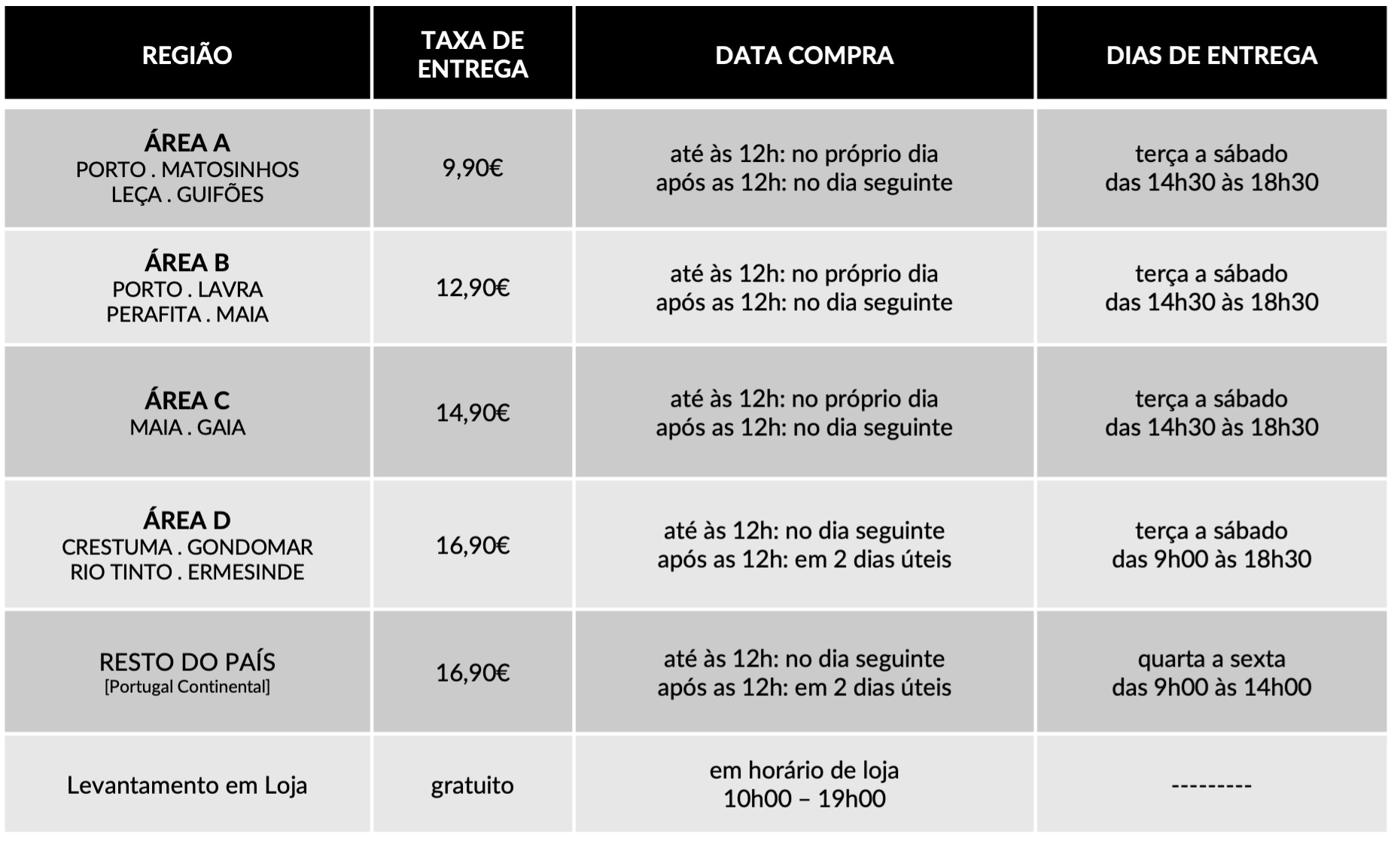
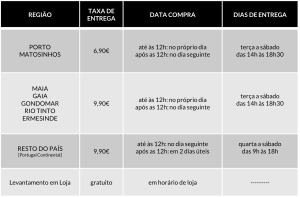
Dedicamos toda a atenção na manutenção e preservação das nossas Flores, garantindo que cheguem ao nosso cliente com toda a frescura, qualidade e beleza. Disponibilizamos várias soluções de manutenção e embalamentos adequando sempre a cada necessidade e contexto da entrega.
Pode incluir na sua oferta uma mensagem personalizada que irá ser reproduzida por nós. No processo da compra online basta preencher o campo ”dedicatória” e escrever a mensagem pretendida.
Valorizamos e priorizamos a qualidade dos serviços e dos nossos produtos. Todas as flores disponibilizadas nos ramos e arranjos disponíveis na loja online são frescas e estão em condições de servir o destinatário.
Caso haja alguma insatisfação por parte do cliente, recomendamos que utilize os nossos canais de comunicação para que possamos analisar a questão.
As fotografias são ilustrativas, quer isto dizer que não garantimos a 100% a sua fieldade com a realidade.
As fotografias devem ser interpretadas como uma base de modelo ou de estética onde as alterações estão sujeitas ao stock da flor e ao trabalho humano de cada florista. Note-se que algumas flores são sazonais e não estão disponíveis todo o ano. Como tal, serão necessárias fazer adaptações consoante a época e o stock da flor.
Para casos onde as alterações sejam extremamente notórias, contactaremos o cliente para ajustar a melhor solução.
Não cancelamos nem alteramos encomendas se esta já se encontrar em fase de curso, ou seja, se já tiver saído da loja e em fase de transporte.
Se a encomenda se encontrar no estado inicial, de processo, é possível alterar e cancelar a encomenda e reaver o seu dinheiro.
Caso não havendo outra referência dada pelo utilizador (por exemplo: deixar no porteiro, na loja x, à pessoa y) o utilizador será contactado de imediato para ficar ao corrente da situação e, à falta de alternativas, a encomenda voltará para a Terrárea, Caso seja reagendada uma nova entrega será cobrada novamente taxa de entrega.
Sublinhamos a importância dos dados fornecidos pelo utilizador estarem correctos e claros. Há sempre a possibilidade do utilizador acrescentar um ponto de referência e outras informações para que não hajam quaisquer dúvidas no acto da entrega garantindo, assim, a qualidade do serviço.
Lamentamos mas não podemos facultar essa informação, se o cliente que realizou a encomenda não pretender.
Estamos abertos a alterações embora estas estejam sempre condicionadas pelo tipo de pedido do utilizador, stock em loja e conceito estético. Nestes casos sugerimos o contacto telefónico ou por email.
Queremos satisfazer todos os nossos clientes e oferecer o nosso melhor serviço. Agradecemos, por isso, todas as opiniões e sugestões para podermos encontrar soluções às suas necessidades! Contacte-nos a partir dos seguintes meios: via email info@terrarea.pt ou telefone 223 170 414

Margin Trading on Layer-2 DEXs: Practical Guide for Traders Who Want Speed, Leverage, and Less Headache
Okay, so check this out—margin trading on Layer‑2 decentralized exchanges feels like rocket fuel for a small engine. Whoa! The promise is simple: faster fills, lower fees, and leverage without custodial custody. But the reality? A lot of moving parts. My instinct said “this will be cleaner,” but then I watched a position evaporate because funding turned against me and the oracle lagged. Seriously?
Short version: Layer‑2s change the cost and latency math. They don’t erase risk. Hmm… let me explain. At the transaction layer you get near‑instant settlement and tiny gas. Medium traders benefit the most. Long institutional flows still need deep liquidity and robust risk controls that not every L2 DEX provides, though some projects are closing that gap by the month.
I’ll be honest—I blew a small account early on using 10x on an L2 perpetual. Oof. It taught me three things fast: control leverage, understand funding, and hedge when you must. There’s a charm to trading on L2s that tempts you to overtrade. Something felt off about my confidence then; I was trading like fees didn’t exist. They do. Fees are just smaller, but their psychological effect is huge.
Why Margin on Layer‑2? The Upside
Lower cost means more active strategies become viable. Short trades, intraday scalps, and arbitrage across chains suddenly make economic sense. Really? Yes. Reduced gas allows you to move in and out without the bitcoin-wallet-heartattack of high Ethereum fees. Order book depth can still be sufficient on top venues. And because many L2 DEXs use optimistic or zk frameworks, they can batch transactions which reduces front‑running and gives tighter spreads.
At the system level, L2 margin opens options like isolated margin per pair and cross margin with faster rebalancing. Initially I thought cross margin would always be safer, but then realized it concentrates risk across positions—so actually, wait—it’s both powerful and dangerous. On one hand you get capital efficiency, though actually, if one instrument cratered you’d feel the pain across your portfolio.
Common Pitfalls — Read This Before You Enter a 5x
Liquidation mechanics differ. Short, sharp sentence. Some platforms use TWAP oracles that smooth prices; others use signed price feeds that can lag during spikes. Middle ground: use limit orders and maintain buffer equity. Longer thought: if your exchange relies on an off‑chain matcher or centralized sequencer, front‑end outages or mempool spam can prevent order cancellation, which compounds with leverage and often ends in forced liquidations that aren’t anyone’s favorite moment.
Here are the usual suspects: oracle lag, funding rate flips, insufficient liquidity, smart contract bugs, and bridging risk when moving collateral between Layer‑1 and Layer‑2. The the tricky part is that many of these risks interact nonlinearly. For example, an oracle lag during a market crash makes liquidations cascade, which spikes slippage, which in turn worsens the oracle signal—feedback loops are nasty.
Practical Controls — What I Do (and What You Should Consider)
Start with leverage you can survive. Short sentence. Use 2–3x until you understand a market’s microstructure. Keep maintenance margin buffers. Use stop‑losses but know they can gap in thin markets. If you rely on auto‑liquidation protections, test them in small sizes first. Also, diversify where you keep collateral. Don’t put everything in a single L2 contract if you can avoid it.
On Layer‑2 specifics: bridge slowly. Test small. I’ve moved funds back and forth between L1 and L2 dozens of times and still get casual nervousness each time. (oh, and by the way…) Use the platform’s native tooling for margin calculations instead of guessing. Some UIs hide liquidation price math in tiny text—read it anyway. Use limit orders for entries when possible; market orders eat slippage and amplify leverage effects.
Automated market makers (AMMs) vs. order books: both exist on L2. AMM‑based margin products are simpler, but they can widen deeply under stress. Order book venues can give you better control but require sufficient matching liquidity. So choose based on strategy, not on hype.
Risk Tradeoffs: Decentralization vs. Performance
Decentralized perpetuals are often “more decentralized” on paper than on reality. Short. Some projects still run off‑chain components or sequencers that are effectively centralized for performance. That brings faster execution but a central point of failure. Initially I admired the trade‑offs, then realized I prefer platforms that make those trade‑offs explicit.
Here’s what bugs me about some L2 rollouts: they tout trustless withdrawals but delay finality behind user experience flows. The smart contract might be trustless, but the UX, the relayer, or the custodian of a bridge could be the weak link. In practice, that means you might feel secure until somethin’ breaks and then your funds are stuck while teams coordinate a fix. Not fun.
Still, platforms that handle those tradeoffs transparently, with clear documentation and open audits, are worth attention. A good example you should check out is dydx—they’ve been building toward low‑cost, high‑throughput trading models and their docs and community signals are useful when you vet counterparty risk.
Operational Checklist Before Trading on an L2 DEX
Wallet readiness: ensure your wallet supports L2 networks and can sign off on the specific contracts. Short. Bridge process: test with a tiny amount. Funding schedule: track funding rate history. Liquidation model: know the exact formula for maintenance margin and how partial liquidations behave. Monitor chain and sequencer status in real time—timeouts happen.
Also, be aware of tax consequences. Fast trading on L2s doesn’t change reporting rules. I’m not your accountant, but keep records—very very important.
FAQ
Is margin trading on Layer‑2 safer than on Layer‑1?
Not inherently. It’s cheaper and faster, which reduces some operational friction, but it introduces different hazards: sequencer risk, bridging delays, and nuanced oracle behaviors. Safer depends on the exact protocol and your risk controls.
What leverage should I start with?
Begin at 2–3x and paper trade first if possible. Short burst: don’t be greedy. Learn how maintenance margin moves as the market shifts and track funding rate volatility over several weeks.
How do I reduce liquidation risk?
Use lower leverage, maintain buffer equity, stagger entry sizes, and prefer limit orders for entry. If available, enable partial close or auto‑reduce functionality. Also watch funding rates—overnight flips can kill marginal positions.