
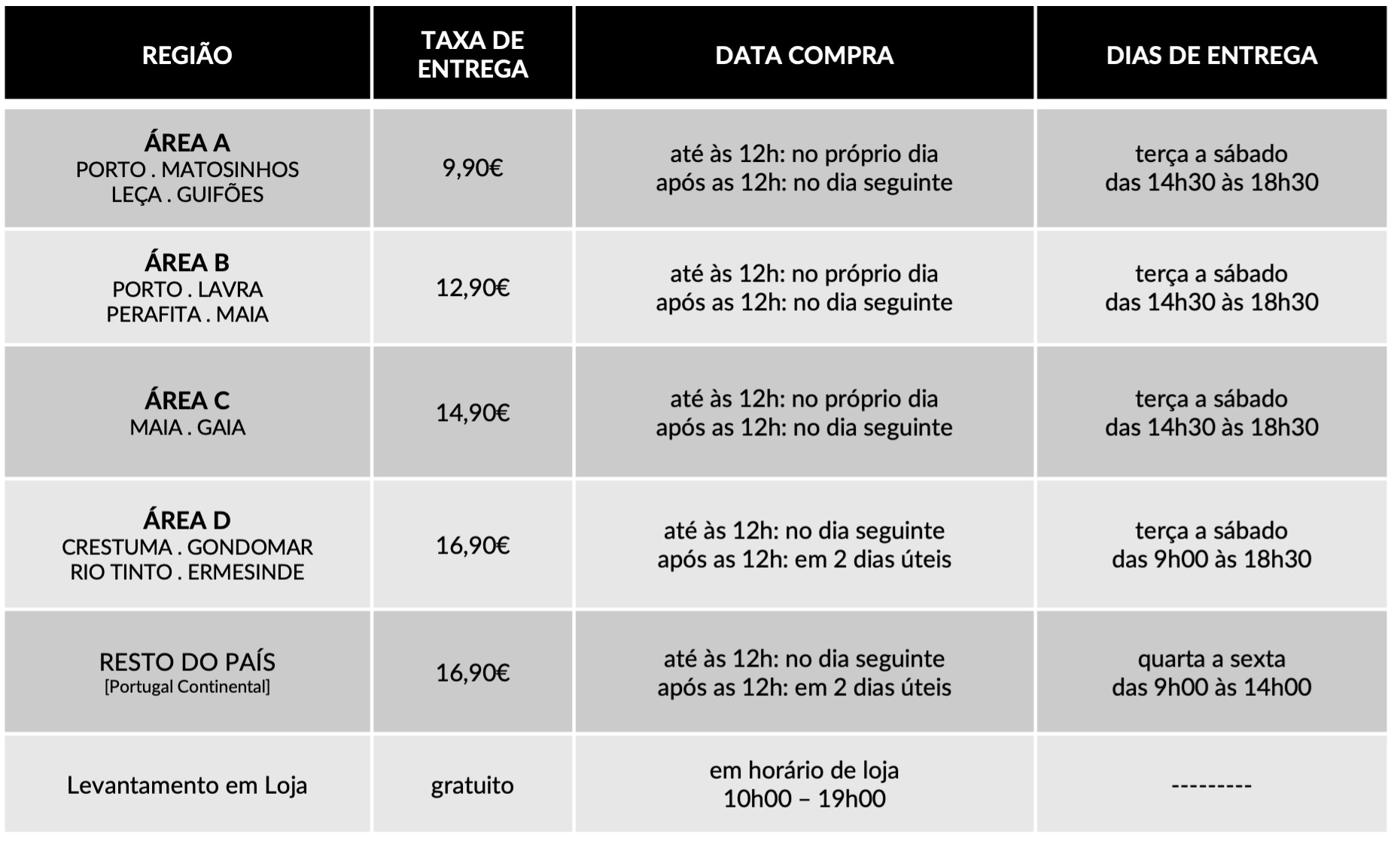
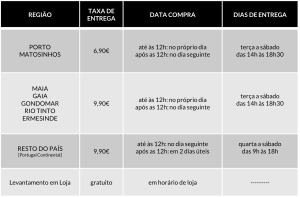
FAQ
Dedicamos toda a atenção na manutenção e preservação das nossas Flores, garantindo que cheguem ao nosso cliente com toda a frescura, qualidade e beleza. Disponibilizamos várias soluções de manutenção e embalamentos adequando sempre a cada necessidade e contexto da entrega.
Pode incluir na sua oferta uma mensagem personalizada que irá ser reproduzida por nós. No processo da compra online basta preencher o campo ”dedicatória” e escrever a mensagem pretendida.
Valorizamos e priorizamos a qualidade dos serviços e dos nossos produtos. Todas as flores disponibilizadas nos ramos e arranjos disponíveis na loja online são frescas e estão em condições de servir o destinatário.
Caso haja alguma insatisfação por parte do cliente, recomendamos que utilize os nossos canais de comunicação para que possamos analisar a questão.
As fotografias são ilustrativas, quer isto dizer que não garantimos a 100% a sua fieldade com a realidade.
As fotografias devem ser interpretadas como uma base de modelo ou de estética onde as alterações estão sujeitas ao stock da flor e ao trabalho humano de cada florista. Note-se que algumas flores são sazonais e não estão disponíveis todo o ano. Como tal, serão necessárias fazer adaptações consoante a época e o stock da flor.
Para casos onde as alterações sejam extremamente notórias, contactaremos o cliente para ajustar a melhor solução.
Não cancelamos nem alteramos encomendas se esta já se encontrar em fase de curso, ou seja, se já tiver saído da loja e em fase de transporte.
Se a encomenda se encontrar no estado inicial, de processo, é possível alterar e cancelar a encomenda e reaver o seu dinheiro.
Caso não havendo outra referência dada pelo utilizador (por exemplo: deixar no porteiro, na loja x, à pessoa y) o utilizador será contactado de imediato para ficar ao corrente da situação e, à falta de alternativas, a encomenda voltará para a Terrárea, Caso seja reagendada uma nova entrega será cobrada novamente taxa de entrega.
Sublinhamos a importância dos dados fornecidos pelo utilizador estarem correctos e claros. Há sempre a possibilidade do utilizador acrescentar um ponto de referência e outras informações para que não hajam quaisquer dúvidas no acto da entrega garantindo, assim, a qualidade do serviço.
Lamentamos mas não podemos facultar essa informação, se o cliente que realizou a encomenda não pretender.
Estamos abertos a alterações embora estas estejam sempre condicionadas pelo tipo de pedido do utilizador, stock em loja e conceito estético. Nestes casos sugerimos o contacto telefónico ou por email.
Queremos satisfazer todos os nossos clientes e oferecer o nosso melhor serviço. Agradecemos, por isso, todas as opiniões e sugestões para podermos encontrar soluções às suas necessidades! Contacte-nos a partir dos seguintes meios: via email info@terrarea.pt ou telefone 223 170 414

Haven Protocol, Mobile Wallets, and the Case for In-Wallet Exchanges
Okay, so check this out—mobile crypto wallets have come a long way. Whoa! They used to be clunky, insecure apps that felt like an afterthought. Now they’re trying to be full financial hubs: private balances, multi-currency support, and even exchanges inside the wallet. My instinct said this would be neat, but also risky. Initially I thought in-wallet exchanges would fix convenience problems, but then I realized the privacy trade-offs are more subtle than most product pages admit.
Here’s the thing. Haven Protocol (XHV) sits at an odd crossroad between privacy coins and synthetic assets, and that design philosophy forces wallet builders to make tough calls. Seriously? Yeah. On one hand, letting users swap XHV for stable-like assets inside a wallet simplifies UX and keeps people in the app. On the other hand, every on-chain or off-chain swap creates metadata, which chips away at privacy in ways users rarely see. Hmm… somethin’ felt off about the marketing copy claiming “complete privacy” while promoting integrated swaps.
I use mobile wallets daily. I test a lot of them — for security, for UX, and for privacy. I’ve set up transaction filters, tried recovery flows, and yes, made mistakes that taught me more than any spec sheet. Something else: when a wallet offers an in-wallet exchange, it’s often a trade-off between custodied convenience and non-custodial principles. At scale, that trade-off matters a lot; very very important to think through.
For privacy-focused users, the main questions are practical: does the wallet leak network-layer data? Are trade orders routed through centralized relays? Does the exchange require KYC? And crucially, does the wallet allow you to maintain plausible deniability or does it paint a clear history of trades? On one hand, non-custodial atomic swaps sound ideal. Though actually, they’re complex and sometimes fragile. On the other hand, centralized liquidity providers are fast but create single points of failure and potential data collection.
How mobile wallets can balance privacy and convenience
Let’s break it down, step by step. First: local key control. If a wallet holds your private keys only on-device, that’s a baseline. But don’t let that fool you—local keys plus cloud backups can still leak metadata if the backup is tied to identifiers. Second: swap routing. Some wallets route swaps through on-device decentralized protocols, while others proxy through servers. My experience says on-device routing is cleaner for privacy, but it means relying on peers and network connectivity, which can be flaky. Third: obfuscation layers. CoinJoin-like techniques, stealth addresses, and ring signatures can help — but they also increase complexity, and not all mobile CPUs handle them well without draining battery.
Okay, so check this: Haven Protocol’s model—blending private storage-like assets with synthetic representations—creates extra UX complexity. You might trade XHV for a synthetic USD pegged asset inside the wallet. That keeps value stable without leaving the privacy ecosystem, but here’s a kicker: the conversion path often touches off-chain services that can log orders. My gut said “this is solvable,” and digging deeper I found some wallets adopting hybrid designs that try to limit server-side logging.
One practical suggestion I give to folks is this: prefer wallets that let you choose swap modes. If the app lets you select between “fast centralized swap” and “peer-led private swap,” use the private swap for sensitive trades. I’m biased, but I always pick the privacy path even if it takes a bit longer. (Oh, and by the way… check backup options closely—recovery phrases stored in plain text on a cloud drive is a dealbreaker for me.)
Another nuance: multi-currency support can increase attack surface. Each currency has different network behaviours. Monero-like privacy tech demands different heuristics than Bitcoin. A wallet that supports both needs robust isolation between coin modules. If not, an exploit in one module might compromise keys or leak transaction correlations across currencies. Initially I underestimated cross-chain leakage, but after testing a few apps I saw how easily correlation could occur through timing and API calls.
Concretely: when you swap between a privacy coin and a transparent one on mobile, pay attention to routing and post-swap custody. Some in-wallet exchanges will deliver the destination coin into an internal custodial pool for speed. That’s fine for small trades, but not if you want long-term privacy. Keep larger holdings in cold storage or in wallets that support stealth and built-in obfuscation. Also, make use of hardware wallets where available—mobile UI plus hardware signing is a strong combo.
Now, about trust-less swaps: atomic swaps sound elegant, and they are a privacy-friendly option when implemented well. However, they often rely on time locks and scripting features that not all chains support. Haven’s ecosystem complicates that because of its synthetic layers. So the pragmatic path many wallets take is to use relayed swaps with cryptographic commitments, which reduces on-chain exposure but still requires trust in the relay. The best wallets make that trust explicit and give you opt-out controls.
Okay, quick aside—if you’re into Monero and want a solid mobile experience, I’ve recommended monero wallet to friends because it nails privacy fundamentals without pretending swaps are risk-free. That link is something I point people toward when they ask for a privacy-first mobile choice. I’m not saying perfect, but it’s pragmatic and focused.
Designers should also remember: transparency in UI matters. Users should see where liquidity comes from and whether a swap reveals on-chain traces. A clean toggle that says “Privacy-first mode (may be slower)” does more for trust than a thousand marketing bullets. People respond to honesty. I like wallets that surface trade paths: “Your swap will route via X node, estimated time Y, privacy score Z.” That level of detail empowers users, even if it sounds nerdy.
One more thing that bugs me: many wallets gloss over network-layer privacy. Even if your transactions are private at the protocol level, packet metadata and peer IPs still leak. Use TOR or built-in onion routing where possible. If the app doesn’t support that, at least provide guidance for mobile VPNs or onion proxies. Small design choices like preferring persistent peer connections over repeated reconnections can reduce fingerprinting risks.
FAQ
Are in-wallet exchanges safe for privacy?
Short answer: it depends. If the swap is performed via a trustless, peer-to-peer mechanism and the wallet minimizes server-side logging, privacy impact can be small. If the swap uses centralized liquidity or requires KYC, privacy is degraded. My advice: treat any in-wallet exchange like a convenience tool, not a private vault for large sums.
Should I use a mobile wallet for long-term storage?
Generally no. Mobile wallets are great for daily use and swaps, but for long-term holdings you want cold storage or hardware wallets. Mobile wallets can be part of a layered strategy—easy access for small spendable funds, offline storage for the rest.
How do I evaluate a wallet’s privacy claims?
Look for clear documentation, open-source code, peer reviews, and options for network obfuscation. Check whether backups are encrypted, whether the wallet supports privacy-preserving protocols, and whether it offers modes you can control rather than defaulting to centralized services.