
FAQ
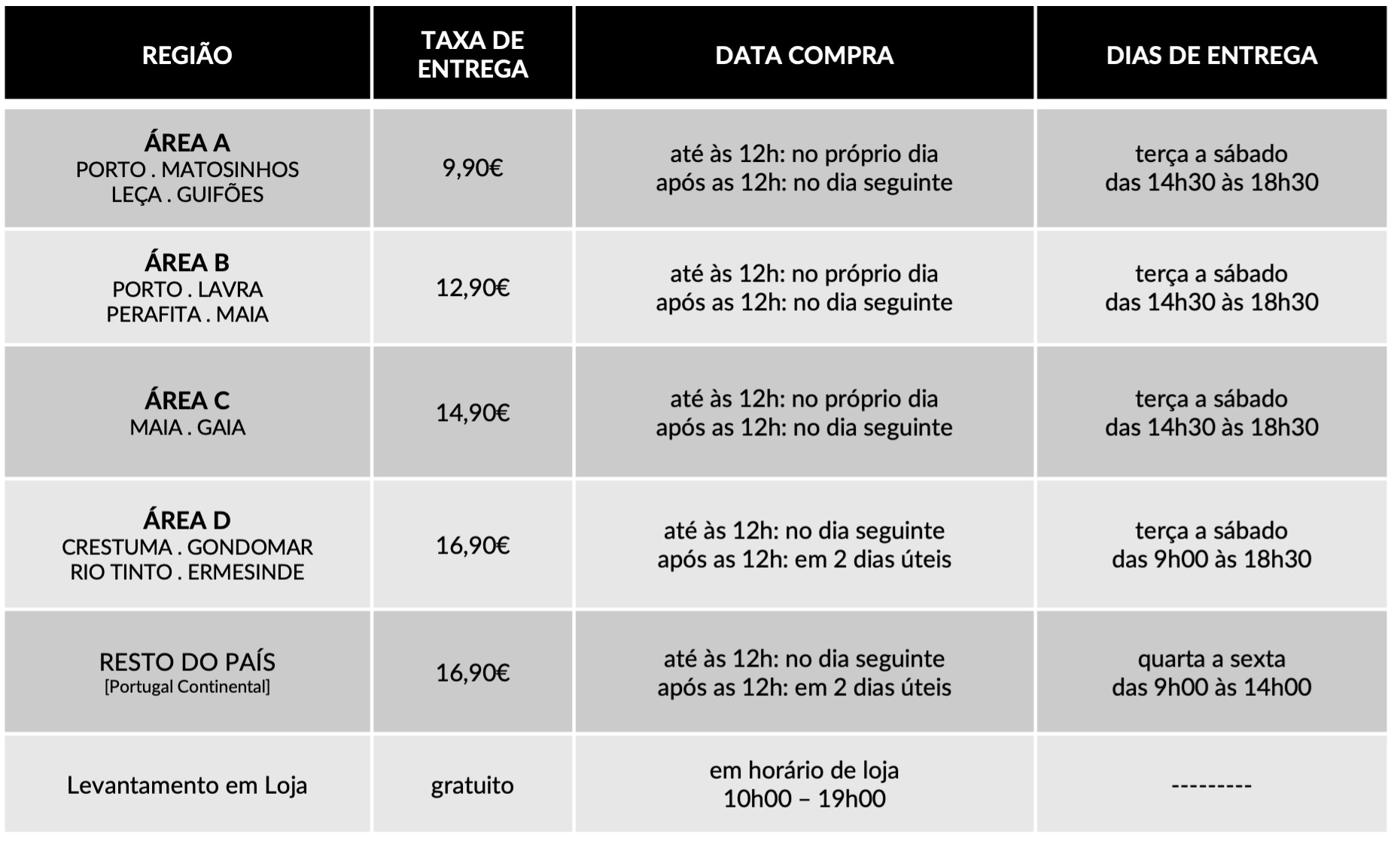
Dedicamos toda a atenção na manutenção e preservação das nossas Flores, garantindo que cheguem ao nosso cliente com toda a frescura, qualidade e beleza. Disponibilizamos várias soluções de manutenção e embalamentos adequando sempre a cada necessidade e contexto da entrega.
Pode incluir na sua oferta uma mensagem personalizada que irá ser reproduzida por nós. No processo da compra online basta preencher o campo ”dedicatória” e escrever a mensagem pretendida.
Valorizamos e priorizamos a qualidade dos serviços e dos nossos produtos. Todas as flores disponibilizadas nos ramos e arranjos disponíveis na loja online são frescas e estão em condições de servir o destinatário.
Caso haja alguma insatisfação por parte do cliente, recomendamos que utilize os nossos canais de comunicação para que possamos analisar a questão.
As fotografias são ilustrativas, quer isto dizer que não garantimos a 100% a sua fieldade com a realidade.
As fotografias devem ser interpretadas como uma base de modelo ou de estética onde as alterações estão sujeitas ao stock da flor e ao trabalho humano de cada florista. Note-se que algumas flores são sazonais e não estão disponíveis todo o ano. Como tal, serão necessárias fazer adaptações consoante a época e o stock da flor.
Para casos onde as alterações sejam extremamente notórias, contactaremos o cliente para ajustar a melhor solução.
Não cancelamos nem alteramos encomendas se esta já se encontrar em fase de curso, ou seja, se já tiver saído da loja e em fase de transporte.
Se a encomenda se encontrar no estado inicial, de processo, é possível alterar e cancelar a encomenda e reaver o seu dinheiro.
Caso não havendo outra referência dada pelo utilizador (por exemplo: deixar no porteiro, na loja x, à pessoa y) o utilizador será contactado de imediato para ficar ao corrente da situação e, à falta de alternativas, a encomenda voltará para a Terrárea, Caso seja reagendada uma nova entrega será cobrada novamente taxa de entrega.
Sublinhamos a importância dos dados fornecidos pelo utilizador estarem correctos e claros. Há sempre a possibilidade do utilizador acrescentar um ponto de referência e outras informações para que não hajam quaisquer dúvidas no acto da entrega garantindo, assim, a qualidade do serviço.
Lamentamos mas não podemos facultar essa informação, se o cliente que realizou a encomenda não pretender.
Estamos abertos a alterações embora estas estejam sempre condicionadas pelo tipo de pedido do utilizador, stock em loja e conceito estético. Nestes casos sugerimos o contacto telefónico ou por email.
Queremos satisfazer todos os nossos clientes e oferecer o nosso melhor serviço. Agradecemos, por isso, todas as opiniões e sugestões para podermos encontrar soluções às suas necessidades! Contacte-nos a partir dos seguintes meios: via email info@terrarea.pt ou telefone 223 170 414

Monero and the Privacy Promise: What “Untraceable” Really Means
Whoa!
Monero has a reputation — a loud one — as the coin for people who want transactions that don’t leave a clear breadcrumb trail.
If you’re privacy-minded, that reputation feels reassuring, even empowering.
But here’s the thing: privacy technology is messy, and the reality is richer and riskier than the marketing blurbs suggest.
I’ll be honest — I got pulled into Monero years ago because somethin’ about a truly private ledger felt overdue, though the trade-offs surprised me.
First impressions matter.
Seriously? Yes — because when you hear “untraceable” you might picture cloak-and-dagger anonymity, and that’s an oversimplification.
At a high level Monero masks sender, receiver, and amounts using ring signatures, stealth addresses, and confidential transactions.
Those features reduce linkability between addresses and hide transaction amounts, which together raise the bar on passive chain-analysis.
On one hand that protects dissidents, journalists, and everyday users who dislike mass surveillance; on the other hand it attracts regulatory scrutiny and complicates compliance for exchanges.
Initially I thought privacy tech would be a neat plug-and-play: install wallet, press send, and you’re invisible.
Actually, wait — let me rephrase that: it’s not plug-and-play for real-world privacy because user behavior, endpoint security, and how you interact with services matter at least as much as protocol details.
If you run a compromised laptop, or reuse identifying information when cashing out, the protocol can only do so much.
My instinct said “privacy solves everything,” though experience taught me privacy mitigates many risks but doesn’t erase them.
So yes — the protocol is strong, but the human layer is the weak link.
Here’s what makes Monero different, at a conceptual level.
Ring signatures mix a spender’s output with other plausible outputs, so observers can’t tell which was actually spent.
Stealth addresses create one-time destination addresses for recipients, preventing simple address reuse tracking.
RingCT (Confidential Transactions) hides amounts, so third parties can’t trivially link values across transactions.
Together these features create plausible deniability and significantly limit standard blockchain tracing techniques.
A realistic view: benefits, limits, and behaviors that matter
Okay, so check this out — Monero raises the baseline for financial privacy in ways that many other cryptocurrencies do not.
That’s great for legitimate privacy needs like shielding donations to vulnerable groups or protecting business transaction confidentiality.
But there are practical limits: network metadata (IP addresses, timing patterns), exchange KYC requirements, and operational mistakes can reveal identities despite on-chain privacy.
Something bugs me about overconfidence here; people often underestimate how leaking a single piece of identifying info can unravel careful on-chain privacy.
If you want to experiment legally and responsibly, try an official monero wallet and read community documentation — but don’t assume that fixes everything.
Security hygiene matters a lot.
Use a dedicated device when you can, keep software updated, and verify wallet binaries or signatures (yes, that extra step is annoying, but worth it).
Also, think about the endpoints: email, exchange accounts, and the phone in your pocket are often the places privacy gets lost.
On the flipside, obsessing over tiny on-chain opacity while ignoring endpoint vulnerabilities is backwards — both matter.
Keep that balance in mind.
Regulatory reality is complicated.
Some jurisdictions treat privacy coins with suspicion; others allow their use with standard financial controls.
If you plan to convert to fiat, expect AML/KYC hurdles and the potential need to explain sources of funds.
I’m biased, but steering clear of shady shortcuts is both ethically and practically wiser — the legal and reputational costs can be severe.
On the other hand, pushing back against blanket surveillance is valid, and privacy tech helps maintain civil liberties in many scenarios.
Ethics and intent are part of the conversation.
Privacy is neutral, yet tools get judged by some people based on worst-case uses.
I’m not 100% sure where regulation will settle — that’s the scary part — though I suspect nuance will grow as policymakers become more literate about tech.
Still, don’t confuse privacy features with permission to break laws.
Use privacy responsibly.
FAQ
Is Monero completely untraceable?
No — that’s a common myth. Monero greatly reduces traceability compared to transparent chains, but metadata, user error, and off-chain links (like exchange accounts) can expose identities. Treat on-chain privacy as an important layer, not an absolute guarantee.
Can I get in legal trouble for using privacy coins?
It depends on jurisdiction and context. Holding or transacting in privacy coins is legal in many places, but converting to fiat or using coins for illicit activity can trigger law enforcement or regulatory action. Know the laws where you live and seek legal advice if you’re unsure.
How should a privacy-conscious user proceed?
Focus on operational security: keep devices patched, verify software, avoid reusing identifying accounts, and understand the limits of on-chain privacy. Prioritize lawful, ethical use cases like protecting personal financial privacy, and be cautious when interacting with exchanges or services that require KYC.