
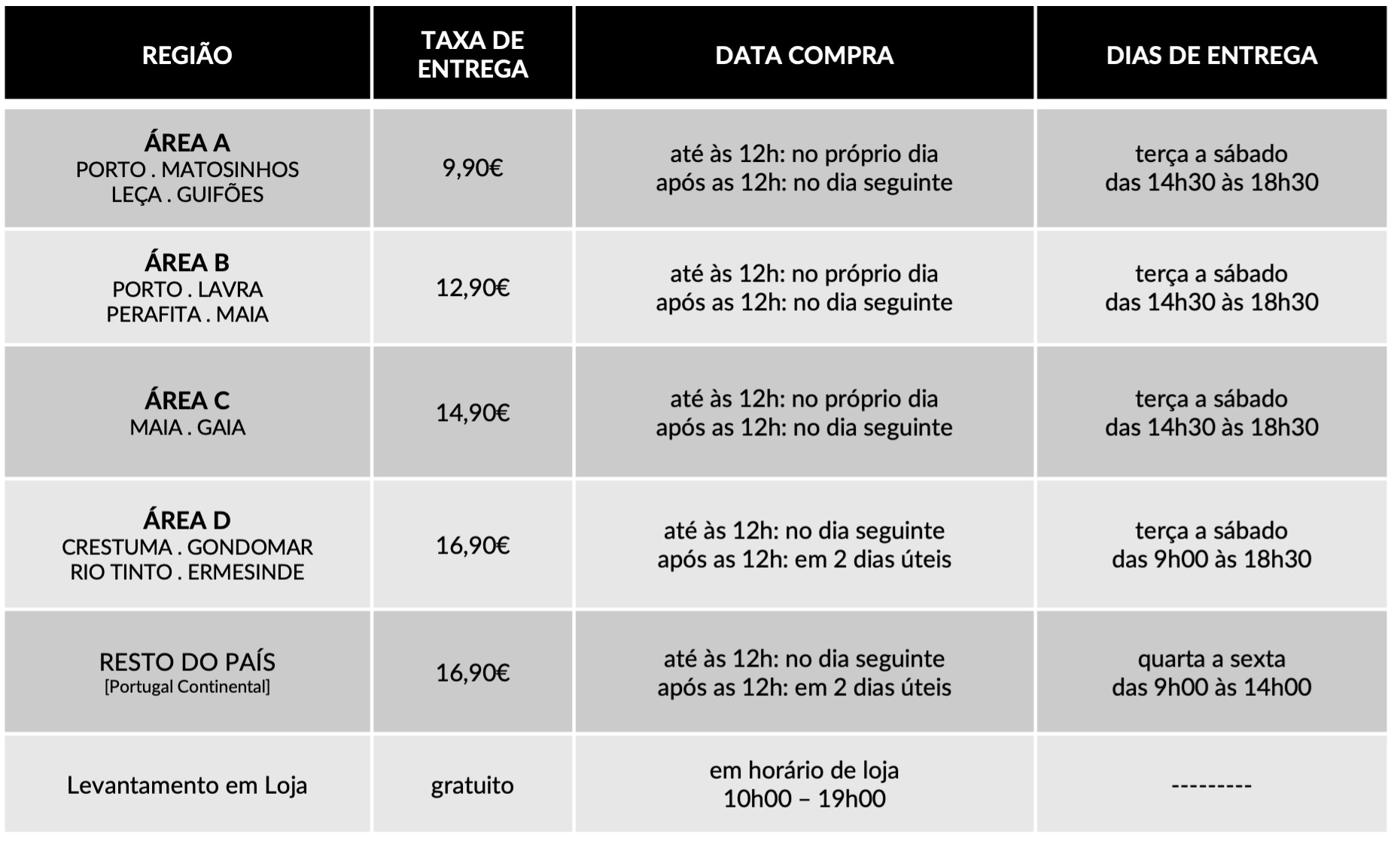
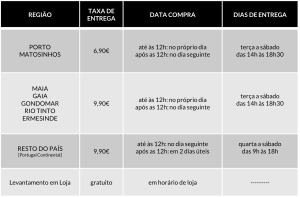
FAQ
Dedicamos toda a atenção na manutenção e preservação das nossas Flores, garantindo que cheguem ao nosso cliente com toda a frescura, qualidade e beleza. Disponibilizamos várias soluções de manutenção e embalamentos adequando sempre a cada necessidade e contexto da entrega.
Pode incluir na sua oferta uma mensagem personalizada que irá ser reproduzida por nós. No processo da compra online basta preencher o campo ”dedicatória” e escrever a mensagem pretendida.
Valorizamos e priorizamos a qualidade dos serviços e dos nossos produtos. Todas as flores disponibilizadas nos ramos e arranjos disponíveis na loja online são frescas e estão em condições de servir o destinatário.
Caso haja alguma insatisfação por parte do cliente, recomendamos que utilize os nossos canais de comunicação para que possamos analisar a questão.
As fotografias são ilustrativas, quer isto dizer que não garantimos a 100% a sua fieldade com a realidade.
As fotografias devem ser interpretadas como uma base de modelo ou de estética onde as alterações estão sujeitas ao stock da flor e ao trabalho humano de cada florista. Note-se que algumas flores são sazonais e não estão disponíveis todo o ano. Como tal, serão necessárias fazer adaptações consoante a época e o stock da flor.
Para casos onde as alterações sejam extremamente notórias, contactaremos o cliente para ajustar a melhor solução.
Não cancelamos nem alteramos encomendas se esta já se encontrar em fase de curso, ou seja, se já tiver saído da loja e em fase de transporte.
Se a encomenda se encontrar no estado inicial, de processo, é possível alterar e cancelar a encomenda e reaver o seu dinheiro.
Caso não havendo outra referência dada pelo utilizador (por exemplo: deixar no porteiro, na loja x, à pessoa y) o utilizador será contactado de imediato para ficar ao corrente da situação e, à falta de alternativas, a encomenda voltará para a Terrárea, Caso seja reagendada uma nova entrega será cobrada novamente taxa de entrega.
Sublinhamos a importância dos dados fornecidos pelo utilizador estarem correctos e claros. Há sempre a possibilidade do utilizador acrescentar um ponto de referência e outras informações para que não hajam quaisquer dúvidas no acto da entrega garantindo, assim, a qualidade do serviço.
Lamentamos mas não podemos facultar essa informação, se o cliente que realizou a encomenda não pretender.
Estamos abertos a alterações embora estas estejam sempre condicionadas pelo tipo de pedido do utilizador, stock em loja e conceito estético. Nestes casos sugerimos o contacto telefónico ou por email.
Queremos satisfazer todos os nossos clientes e oferecer o nosso melhor serviço. Agradecemos, por isso, todas as opiniões e sugestões para podermos encontrar soluções às suas necessidades! Contacte-nos a partir dos seguintes meios: via email info@terrarea.pt ou telefone 223 170 414

How I Use Bots, Launchpads, and Yield Farming to Trade Like Someone Who’s Done This Before
Whoa!
Trading crypto feels like juggling while the stage is shifting.
I got pulled into this world because of a gut feeling—my instinct said there was a smarter way to scale returns without losing my mind.
At first I thought bots were just for the quant shops.
Actually, wait—let me rephrase that: I assumed automated strategies needed massive capital or fancy infra, but that isn’t strictly true.
Here’s the thing.
Bots, launchpads, and yield farming are different animals.
They overlap.
They step on each other’s toes sometimes.
On one hand, bots can be pure execution tools; on the other, they become active managers of capital that you’d otherwise leave idle.
Trading bots—short version.
They remove emotion.
They enforce rules.
They also amplify mistakes if your rules are trash.
My first bot trade was a mess; I let position sizing slide and it amplified losses, very very painful lesson.
Dig a little deeper and bots become interesting.
You can run market-making strategies on a centralized exchange and capture spread if latency and fees cooperate.
You can arbitrage between perpetuals and spot using funding-rate plays, though that requires precise fee math and a buffer for slippage.
Initially I thought funding arbitrage was bulletproof, but then realized funding resets, liquidity dries up, and that cushion disappears fast—so you need exit rules.
My instinct still likes these setups, but only when paired with automated risk limits and live monitoring.
Bot design tips from the trenches.
Backtest on realistic fills, not idealized prices.
Simulate orderbook depth and exchange fees.
Keep position sizing rules hard-coded (no “I feel lucky” moments).
Also log everything—every order, cancel, and fill—because later you’ll be grateful when debugging that weird blip.
Launchpads—why traders care.
They offer early allocations to tokens before wider trading.
The upside can be outsized.
The downside is lockups and rug risk.
Honestly, this part bugs me: retail often chases hyped launches without reading vesting schedules.
Look for proven projects, teams with on-chain history, and backers who actually add value.
Also check tokenomics.
If 70% of supply is locked in for insiders, tread carefully.
On the flip side, some launchpads via major exchanges give easier access and simplified vetting (though that doesn’t guarantee safety).
For a quick reference on exchange-based launchpads and how they work, check out this guide here.
Yield farming for the exchange-native trader
Yield farming used to mean LPing on DEXes and hoping AMMs didn’t punish you.
Now there are centralized products that feel like yield but live inside an exchange.
You can lend assets, stake them in exchange-run pools, or participate in saver-style programs with flexible withdrawal terms.
This is attractive if you want DeFi-like yields without impermanent loss—or without holding keys off an exchange.
Hmm… but custody risk is real.
Quick rules: compare nominal APYs with effective returns after platform fees and taxes.
Factor in counterparty risk and read the small-print (withdrawal windows, lockups).
Often the math favors diversified smaller allocations across complementary instruments rather than betting everything on the highest APY.
I’m biased toward modest allocations that let me sleep at night.
Somethin’ about compound interest is intoxicating though—so curb the FOMO.
How to combine these three pillars effectively.
Use bots to harvest small inefficiencies and scale the execution of launchpad allocations and yield strategies.
For example, a bot can rotate capital between a high-yield lending product and a market-making leg based on spread thresholds and liquidity.
On paper it sounds neat; in practice you need safeguards: daily max drawdown, stop-loss ladders, and cooldown timers after big events.
It’s easy to over-optimize to past data and miss regime shifts—remember that.
Operational hygiene matters more than you think.
API keys should have IP whitelisting when possible.
Separate accounts for live and testing.
Use alerts linked to phone/SMS and a runbook for incidents.
Also, keep a written plan for catastrophic scenarios (exchange hacks, black swan funding shifts, sudden delistings).
Common mistakes I still see.
Too much leverage.
Chasing APY hysteria.
Ignoring the cost of leverage on funding.
And trusting a bot because it “ran well last month” without stress-testing it under a vol spike.
Seriously? People still do that.
On psychology.
Bots calm you, but they can also create complacency.
I’ve felt that complacency.
My instinct said everything was fine—then an oracle glitch blew up a position.
So remain skeptical, and build margin for error.
When to use which tool.
Use bots for repetitive, rapid tasks and for risk-managed arbitrage.
Treat launchpads as selective, research-heavy opportunities.
View exchange-native yield as a capital efficiency layer, not a replacement for long-term positions.
On one hand these tools can be modular; though actually combining them without creating hidden correlations takes practice.
FAQ
Can a retail trader run bots profitably on centralized exchanges?
Yes, but expect a learning curve. Start with small capital, limit orders, and simple strategies (e.g., grid or funding-rate capture). Backtest with slippage and fees, run in paper mode, then scale slowly. Also be ready to step in manually when markets move in ways your model didn’t expect.
Are launchpads worth it?
They can be, if you do due diligence and understand vesting. Allocations sometimes reward early adopters, but token unlocks and speculative mania can wipe gains. I treat launchpads as targeted plays, not a core portfolio strategy.
Okay, so check this out—there’s no one right path.
What felt like a coherent strategy last quarter can look naive the next.
But if you combine thoughtful automation, disciplined due diligence on new tokens, and cautious yield allocation, you build a toolkit that adapts.
I’ll be honest: I’m not 100% sure any of this is future-proof.
Still, these methods help me trade smarter rather than louder, and that’s the point.