
FAQ
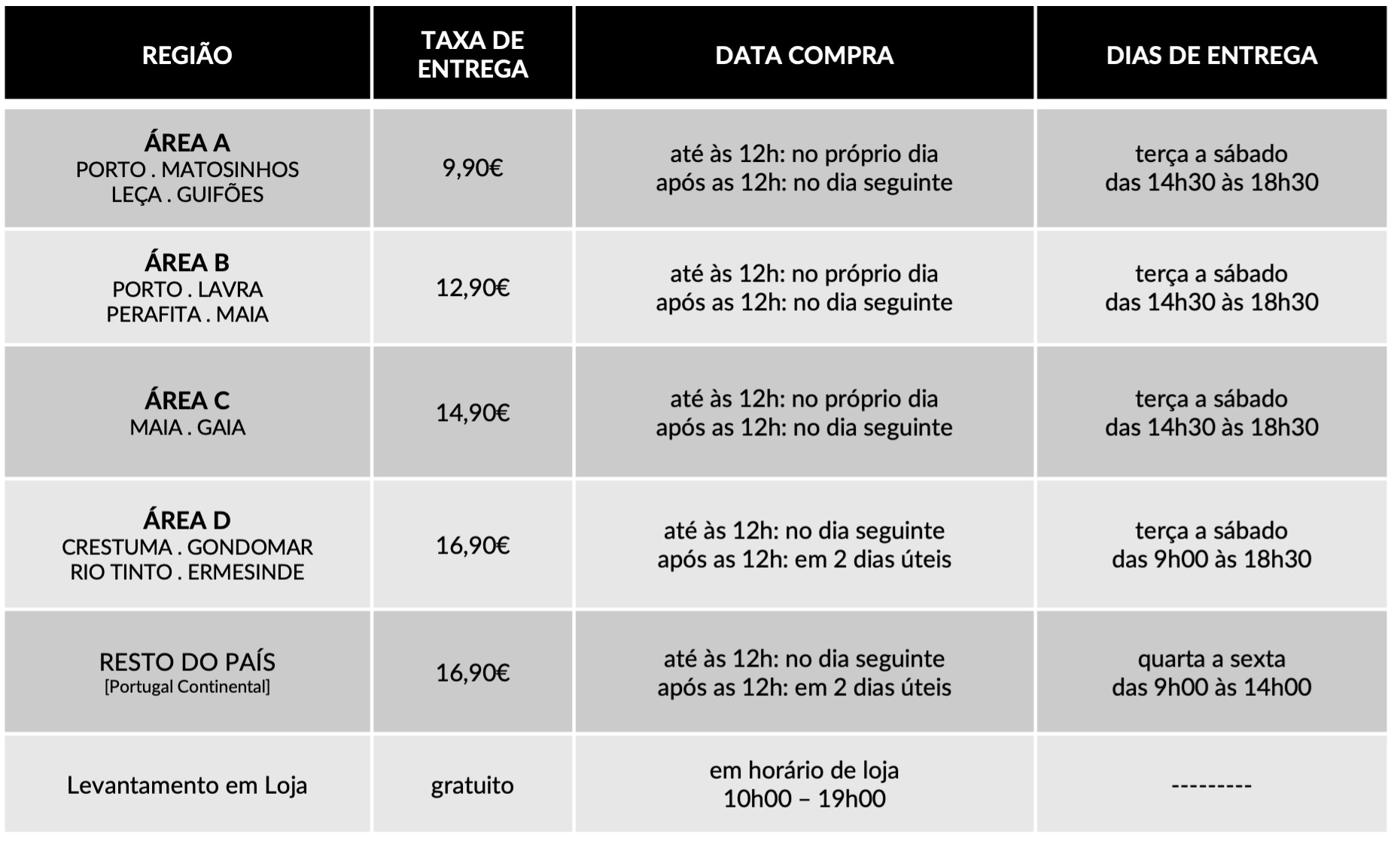
Dedicamos toda a atenção na manutenção e preservação das nossas Flores, garantindo que cheguem ao nosso cliente com toda a frescura, qualidade e beleza. Disponibilizamos várias soluções de manutenção e embalamentos adequando sempre a cada necessidade e contexto da entrega.
Pode incluir na sua oferta uma mensagem personalizada que irá ser reproduzida por nós. No processo da compra online basta preencher o campo ”dedicatória” e escrever a mensagem pretendida.
Valorizamos e priorizamos a qualidade dos serviços e dos nossos produtos. Todas as flores disponibilizadas nos ramos e arranjos disponíveis na loja online são frescas e estão em condições de servir o destinatário.
Caso haja alguma insatisfação por parte do cliente, recomendamos que utilize os nossos canais de comunicação para que possamos analisar a questão.
As fotografias são ilustrativas, quer isto dizer que não garantimos a 100% a sua fieldade com a realidade.
As fotografias devem ser interpretadas como uma base de modelo ou de estética onde as alterações estão sujeitas ao stock da flor e ao trabalho humano de cada florista. Note-se que algumas flores são sazonais e não estão disponíveis todo o ano. Como tal, serão necessárias fazer adaptações consoante a época e o stock da flor.
Para casos onde as alterações sejam extremamente notórias, contactaremos o cliente para ajustar a melhor solução.
Não cancelamos nem alteramos encomendas se esta já se encontrar em fase de curso, ou seja, se já tiver saído da loja e em fase de transporte.
Se a encomenda se encontrar no estado inicial, de processo, é possível alterar e cancelar a encomenda e reaver o seu dinheiro.
Caso não havendo outra referência dada pelo utilizador (por exemplo: deixar no porteiro, na loja x, à pessoa y) o utilizador será contactado de imediato para ficar ao corrente da situação e, à falta de alternativas, a encomenda voltará para a Terrárea, Caso seja reagendada uma nova entrega será cobrada novamente taxa de entrega.
Sublinhamos a importância dos dados fornecidos pelo utilizador estarem correctos e claros. Há sempre a possibilidade do utilizador acrescentar um ponto de referência e outras informações para que não hajam quaisquer dúvidas no acto da entrega garantindo, assim, a qualidade do serviço.
Lamentamos mas não podemos facultar essa informação, se o cliente que realizou a encomenda não pretender.
Estamos abertos a alterações embora estas estejam sempre condicionadas pelo tipo de pedido do utilizador, stock em loja e conceito estético. Nestes casos sugerimos o contacto telefónico ou por email.
Queremos satisfazer todos os nossos clientes e oferecer o nosso melhor serviço. Agradecemos, por isso, todas as opiniões e sugestões para podermos encontrar soluções às suas necessidades! Contacte-nos a partir dos seguintes meios: via email info@terrarea.pt ou telefone 223 170 414

Running a Bitcoin Full Node, Mining, and What Real Validation Actually Means
Okay, so check this out—running a full node is more than just downloading blocks. Wow! It feels like a hobby and a civic duty rolled into one. Many people treat a node as a wallet backend or a miner’s companion, but really it’s the arbiter of consensus for you, personally. Initially I thought it was all about disk space, but then I realized chainstate RAM and I/O patterns are the real bottleneck for many setups—especially if you push the node hard while also trying to mine on the same hardware.
Here’s the thing. A full node does two jobs simultaneously: it validates every rule in Bitcoin’s consensus set and it shares what it knows with the network. Really? Yes. Validation is not a light-weight trust exercise. It means checking block headers, Merkle roots, transaction scripts, sequence locks, BIP9 activations, witness data, and more. These checks prevent bad data from being accepted. On the other hand, mining is the process of proposing new blocks that other nodes will validate—two tightly coupled but distinct roles.
Whoa! If that sounds intimidating, you’re not wrong. But it’s also empowering. Running a node means you don’t have to ask anyone whether a transaction was valid or whether a block was legit. Your node tells you. I should be clear: I’m summarizing community experience and developer docs rather than claiming any single heroic anecdote. Still, these are practical trade-offs people live with every day.
Hardware and configuration: what actually matters
Medium CPUs suffice for most people. Fast single-core performance helps because verification (sig checks) can be CPU bound for blocks containing many signatures. SSDs matter a lot. Seriously—spinning disks turn IBD into a multi-day slog. NVMe gives better random I/O which helps when loading chainstate. RAM is important too; the UTXO set is large and needs to be efficiently accessed. If you run with txindex=1, plan for even more disk and memory. I’m biased, but a small NVMe (500GB) for blocks and a larger HDD for backups is a practical split.
Pruning is an option if you’re short on disk. Pruned nodes discard old block data while keeping the UTXO set needed for validation. Initially I thought pruning would cripple functionality; actually, wait—let me rephrase that—pruned nodes validate and relay new blocks just fine, but they can’t serve historical block data to peers, and certain features like rescanning for older wallet transactions become awkward. So pruning helps the the disk problem but trades off archival responsibilities.
Network matters too. You should allow inbound connections (port 8333) if you can. The most robust nodes in the wild are those with stable, symmetric bandwidth and predictable uptime. On a residential connection you might be NATed behind a CGNAT; in that case, outbound-only works for personal validation, but you won’t help the network much. (oh, and by the way… seed nodes change over time, so keep your client updated.)
Disk I/O patterns are often overlooked. Validation does many small reads and writes. If you jam a node and a miner on the same drive, they fight for I/O and you get latency spikes. Separate drives or a faster single drive help. Also, the –dbcache setting matters: increasing DB cache reduces disk churn at the cost of RAM. Tune it to your hardware.
Firmware and filesystem choices matter. Use ext4 or XFS on Linux with sane mount options. TRIM for SSDs can be useful. Windows users should watch for antivirus interactions. Yes, these are dull topics, but they bite you if ignored.
Mining nuances: don’t confuse mining with validation
Mining creates candidate blocks. Your miner asks the node for a block template, fills the coinbase, and works on a header. The node’s job is to ensure the template only includes valid transactions (or at least those that will likely be valid) and that the block adheres to the most recent consensus rules. If your node is misconfigured—for example, if it hasn’t fully finished IBD or is running on a forked chain—your miner will be wasting hashpower on blocks the network will reject.
Solo mining with a home rig is feasible but unlikely to find a block unless you’re in a small pool era or running specialized hardware. Pools are how most people mine. Pools still benefit from a locally validated view of the chain, but many miners rely on pool infrastructure. If you decide to solo mine, remember that your full node must be fully synced and remain up-to-date with soft-fork activations, which means keeping software updated and monitoring your node’s health.
Here’s a subtle point: pruned nodes can mine. They validate and can provide block templates as long as they maintain the chain tip and the necessary mempool/UTXO state. However, you lose the ability to rebuild or re-verify historical blocks locally if you later need that data, unless you re-download everything. So, for a home miner who wants the lowest disk footprint, pruning is a workable compromise—but keep backups and be aware of the limitations.
FAQ
Q: Can I run a full node on a Raspberry Pi?
A: Yes, many people run nodes on Pi 4 devices with an external SSD. It’s slower for IBD and validation than a beefy desktop, but it’s affordable and low-power. Use an NVMe or a USB3 SSD, set a reasonable –dbcache, and expect initial sync to take days. Also watch the SD card—avoid running databases on it. Somethin’ to remember: constant writes will wear cheap storage.
Q: What about privacy—does running a node help?
A: Running your own node gives you better privacy than trusting third-party nodes because you don’t leak your wallet queries to external services. But the node does connect to peers and relay patterns can leak info. Use Tor if you need strong network-level privacy, and configure the client appropriately. I’m not 100% sure this solves every edge case, but it’s a big step up from SPV or hosted solutions.
Q: Is pruning incompatible with wallets or mining?
A: Not incompatible, but limited. Pruned nodes can support wallets and mining, but rescanning for old transactions or rebuilding indexes requires re-downloading blocks. If you rely on historical queries (like searching for old txs) enable txindex or keep an archival node. For mining, a pruned node still produces block templates provided it has the latest chain tip and mempool data.
Q: How do I recover wallet data?
A: Back up your seed phrases or wallet descriptors, not just wallet.dat. Backups should be encrypted and stored offline. If you use legacy wallet.dat backups, note that some operations (like BIP32 derivation changes or descriptor wallets) change best practices. Double-check your workflow and test restores in a controlled environment. This part bugs me—many people skip restores until it’s too late.
On one hand, a full node is simple: run the client, let it validate. On the other hand, every deployment has trade-offs—space vs. archival needs, CPU vs. parallel validation, bandwidth vs. connectivity. Initially I thought a one-size-fits-all guide would be enough, though actually the community’s varied use-cases make that impossible. So pick the approach that matches your goals: privacy, sovereignty, mining, or simply helping the network.
I’ll be honest—keeping a node healthy requires some babysitting. Monitor logs, watch chain tip timestamps, keep upgrades timely, and set alerts if you depend on uptime. There are tools and scripts that help, but no substitute for occasional human checks. If you want a recommended starting point, check the official client and documentation at bitcoin core. It’s the anchor for most node deployments and a good reference for flags and expected behavior.
So, what now? Decide your priorities, plan your hardware, and be prepared for learning curves. Running a node is not a set-and-forget hobby for everyone, though many people find it surprisingly low-maintenance after the initial sync. Something felt off about expecting instant mastery—because there’s always one more subtlety—but that’s part of the fun if you like digging in. Happy validating… and watch your I/O.