
FAQ
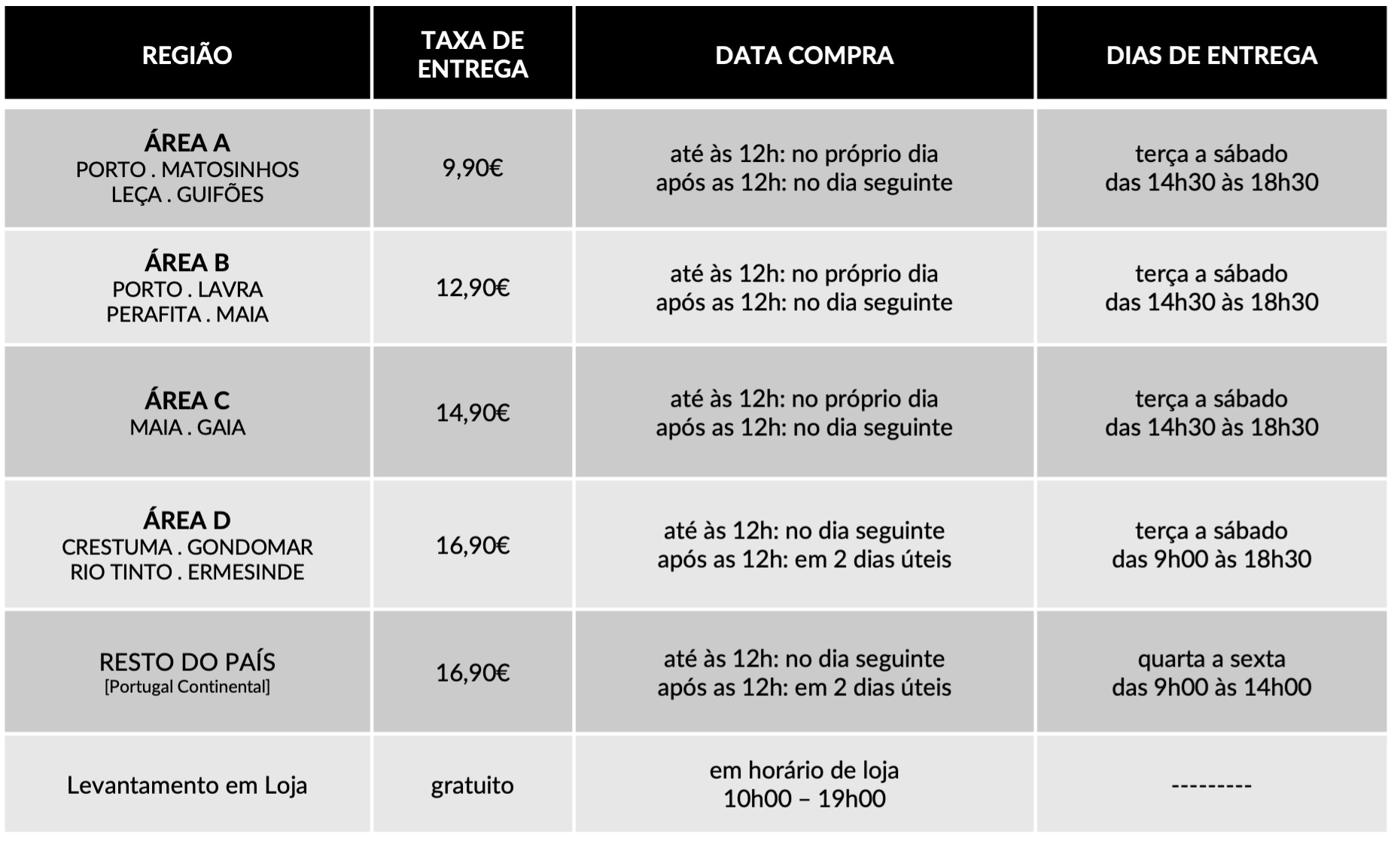
Dedicamos toda a atenção na manutenção e preservação das nossas Flores, garantindo que cheguem ao nosso cliente com toda a frescura, qualidade e beleza. Disponibilizamos várias soluções de manutenção e embalamentos adequando sempre a cada necessidade e contexto da entrega.
Pode incluir na sua oferta uma mensagem personalizada que irá ser reproduzida por nós. No processo da compra online basta preencher o campo ”dedicatória” e escrever a mensagem pretendida.
Valorizamos e priorizamos a qualidade dos serviços e dos nossos produtos. Todas as flores disponibilizadas nos ramos e arranjos disponíveis na loja online são frescas e estão em condições de servir o destinatário.
Caso haja alguma insatisfação por parte do cliente, recomendamos que utilize os nossos canais de comunicação para que possamos analisar a questão.
As fotografias são ilustrativas, quer isto dizer que não garantimos a 100% a sua fieldade com a realidade.
As fotografias devem ser interpretadas como uma base de modelo ou de estética onde as alterações estão sujeitas ao stock da flor e ao trabalho humano de cada florista. Note-se que algumas flores são sazonais e não estão disponíveis todo o ano. Como tal, serão necessárias fazer adaptações consoante a época e o stock da flor.
Para casos onde as alterações sejam extremamente notórias, contactaremos o cliente para ajustar a melhor solução.
Não cancelamos nem alteramos encomendas se esta já se encontrar em fase de curso, ou seja, se já tiver saído da loja e em fase de transporte.
Se a encomenda se encontrar no estado inicial, de processo, é possível alterar e cancelar a encomenda e reaver o seu dinheiro.
Caso não havendo outra referência dada pelo utilizador (por exemplo: deixar no porteiro, na loja x, à pessoa y) o utilizador será contactado de imediato para ficar ao corrente da situação e, à falta de alternativas, a encomenda voltará para a Terrárea, Caso seja reagendada uma nova entrega será cobrada novamente taxa de entrega.
Sublinhamos a importância dos dados fornecidos pelo utilizador estarem correctos e claros. Há sempre a possibilidade do utilizador acrescentar um ponto de referência e outras informações para que não hajam quaisquer dúvidas no acto da entrega garantindo, assim, a qualidade do serviço.
Lamentamos mas não podemos facultar essa informação, se o cliente que realizou a encomenda não pretender.
Estamos abertos a alterações embora estas estejam sempre condicionadas pelo tipo de pedido do utilizador, stock em loja e conceito estético. Nestes casos sugerimos o contacto telefónico ou por email.
Queremos satisfazer todos os nossos clientes e oferecer o nosso melhor serviço. Agradecemos, por isso, todas as opiniões e sugestões para podermos encontrar soluções às suas necessidades! Contacte-nos a partir dos seguintes meios: via email info@terrarea.pt ou telefone 223 170 414

Running a Full Bitcoin Node: Why It Still Matters (and How Mining Relates)
Whoa! Bitcoin feels less mystical now. For many of us, running a full node started as a hobby. Then it became a habit. Now it’s civic infrastructure for the internet of money.
Seriously? Yes. My first node was on a tired laptop in 2015. It hummed and stuttered. I thought it was overkill. Initially I thought it was just about validating blocks, but then I realized nodes are about sovereignty, privacy, and network health all at once. On one hand miners create blocks; on the other nodes verify them and propagate them, and those roles are distinct though deeply interdependent.
Here’s the thing. A node does not mine. It does something almost more radical: it refuses to trust. That refusal means your node checks every transaction and every block against consensus rules. Something felt off about the way people conflate nodes and miners. I’m biased, but that confusion bugs me. Being precise here matters when you explain dev decisions or when you’re troubleshooting fork risk.
Okay, so check this out—mining secures the chain by expending energy and staking economic weight, while nodes secure the protocol by enforcing the rules. Miners choose which transactions to include based on fees and preferences, but honest miners still follow the rules because nodes reject invalid blocks. On a network-level timescale this creates a feedback loop: blocks accepted by many nodes become canonical, and miners that diverge find themselves orphaned. It’s a delicate dance, like a jazz band with too many drummers.
Why run a full node in 2026?
Short answer: sovereignty and observability. Long answer: you get cryptographic verification of the ledger, you avoid trusting third-party services, and you can audit mempool behavior locally. My instinct said nodes were niche, but adoption has slowly grown—partly thanks to privacy-aware wallets and custodial fatigue after several big failures. I’m not 100% sure everyone needs to run one, though; a lot depends on threat model and technical appetite.
Running Bitcoin Core on a home machine gives you two practical things: you validate the rules, and you contribute to network topology by relaying blocks and transactions. It’s also a debugging tool. When the network acts weird (fork chatter, mempool spikes), your node tells a story that centralized explorers might redact or misinterpret. On the other hand, running a node uses bandwidth and disk, which are not free, so plan for storage growth and pruning options if you need to economize.
Practical tip: prune if you have limited disk space. Pruning keeps the UTXO history necessary for validation but trims old block files, making a full validation node feasible on modest hardware. People sometimes assume pruning means “not a real node”—that’s incorrect. A pruned node still validates all rules from genesis; it simply discards raw block data it no longer needs to serve to others. This is a good compromise for many households.
Where does mining fit into this picture?
Miners and nodes answer different questions. Miners answer “which transactions do I include to maximize reward?” Nodes answer “is this block valid?” There’s overlap in incentive alignment, but roles are separate. Initially I thought mining bound the system together, though actually it’s the validation by nodes that holds miners accountable. If miners try to sneak in an invalid block, nodes will reject it and the miner loses their reward—so nodes are a brake on misbehavior.
Large mining pools matter, obviously. Concentration of hashing power raises real governance and censorship concerns, though miners also compete economically and that competition tempers power. On the flip side, if many users run their own full nodes, miners have less room to push arbitrary rule changes because they’d risk producing blocks outsiders reject. So every additional node increases the cost of covert protocol changes. That dynamic kept Bitcoin honest through many tense moments.
Okay, a quick aside—oh, and by the way, if you track network data often you notice interesting regional patterns, like how latency spikes around U.S. internet outages or how miner activity shifts with energy price changes. This kind of observational insight is why I run a separate analytics instance alongside my node; it’s overkill for most folks, but it teaches you the network’s personality.
Installing and maintaining Bitcoin Core
Install the official client from a trustworthy source. Seriously, check signatures. I learned the hard way that package mirrors can be confusing. Once installed, configure bitcoin.conf for your needs: control connections, enable pruning if needed, set rpcallowip carefully, and consider the wallet options. Initially I left RPC wide open on my LAN and regretted it—be conservative.
Keep backups. Make them automated. A solitary mnemonic is fragile in domestic settings—fires, floods, and forgetfulness happen. I use a combination of encrypted USB backups and cold paper backups stored separately. Sounds paranoid? Maybe. But it’s practical in the same sense as locking your front door.
Performance tips: use SSD storage, verify your router allows inbound port 8333 if you want to be reachable, and consider running on a beefy ARM device or small x86 box if you want low power draw. Also, tune your pruning and dbcache settings depending on RAM. People often set dbcache too low and then wonder why initial sync drags on forever. Increase dbcache to speed up IBD, but watch your RAM footprint.
For deeper reading and setup walkthroughs, I keep a concise guide linked here: https://sites.google.com/walletcryptoextension.com/bitcoin-core/
Network health, topology, and your node’s role
Nodes shape topology by who they connect to and how they relay. Short bursts of churn are normal when nodes join or leave, though persistent partitioning is a red flag. My node logs have saved me during a few contentious upgrades, showing me exactly which peers announced which blocks and when. That evidence is priceless when you need to diagnose propagation lag or potential eclipse attempts.
Want to be a good citizen? Run at least one publicly reachable node and consider running multiple nodes with different wallets or configurations for redundancy. This helps the network resist censorship and amplification attacks. Also, run your node as a watchdog if you rely on third-party services: your node verifies their claims, and if they lie, you know it fast. Being your own auditor is empowering in a tech ecosystem full of opaque intermediaries.
Common Questions
Does running a node mean I must run a miner?
No. You can validate blocks and enforce consensus rules without mining. Mining requires specialized hardware and is capital intensive, whereas nodes mostly require modest hardware and bandwidth. A full node strengthens the network even if you never intend to mine.
How much bandwidth and storage will I need?
Expect initial sync to download several hundred gigabytes, and plan for ongoing growth in tens of gigabytes per year depending on activity. Bandwidth usage varies with peer behavior and your relay settings. Pruning significantly reduces storage needs, and compressing backups helps too—but don’t skimp on redundancy.
Can a single node protect my privacy?
Partially. A full node removes reliance on third parties for transaction verification, but it doesn’t automatically make you anonymous. Combine your node with privacy-minded wallets and techniques (coin control, Tor, avoid address reuse). I’m not 100% sure about perfect privacy, but running your own node is a huge step forward compared to trusting others.