
FAQ
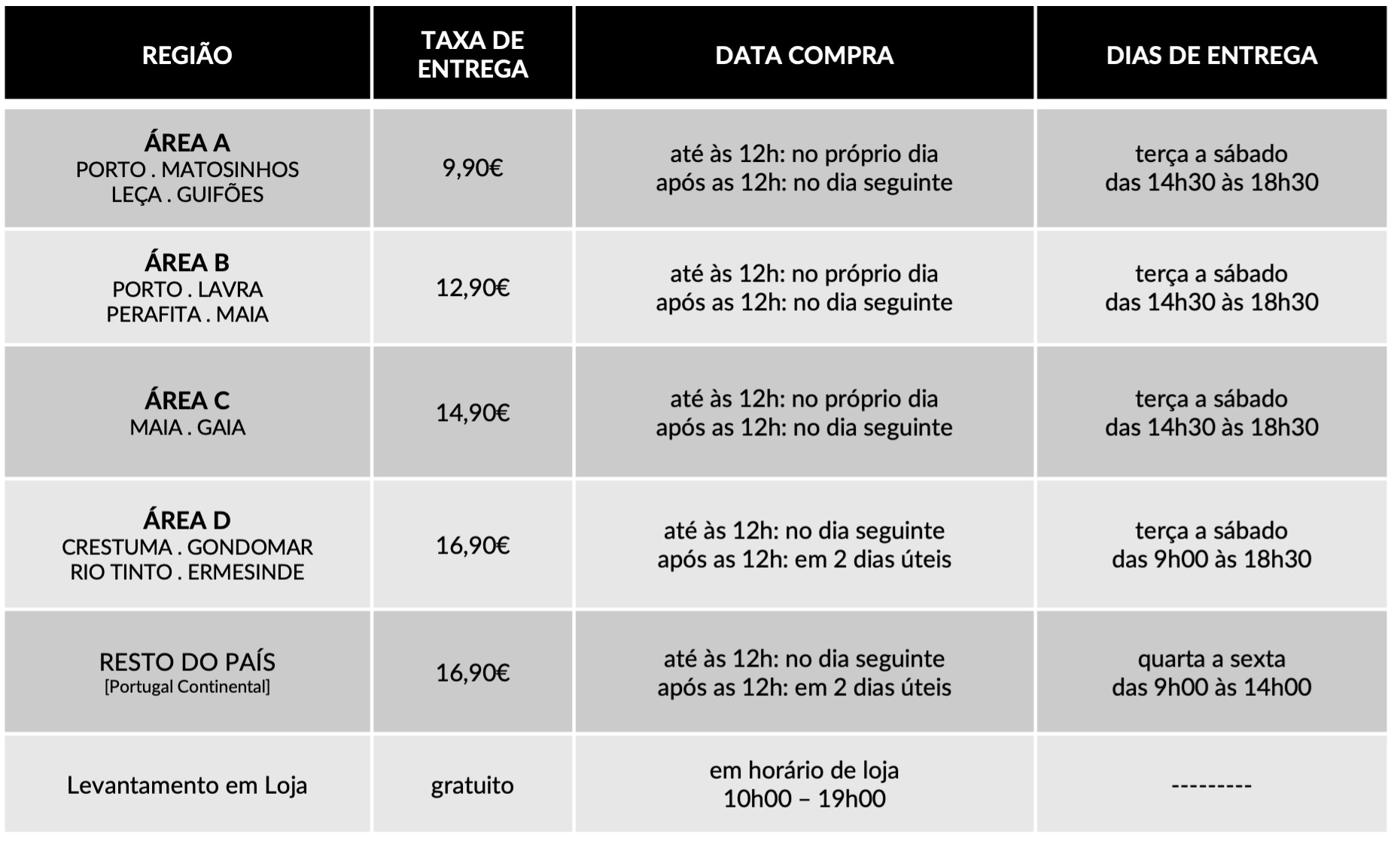
Dedicamos toda a atenção na manutenção e preservação das nossas Flores, garantindo que cheguem ao nosso cliente com toda a frescura, qualidade e beleza. Disponibilizamos várias soluções de manutenção e embalamentos adequando sempre a cada necessidade e contexto da entrega.
Pode incluir na sua oferta uma mensagem personalizada que irá ser reproduzida por nós. No processo da compra online basta preencher o campo ”dedicatória” e escrever a mensagem pretendida.
Valorizamos e priorizamos a qualidade dos serviços e dos nossos produtos. Todas as flores disponibilizadas nos ramos e arranjos disponíveis na loja online são frescas e estão em condições de servir o destinatário.
Caso haja alguma insatisfação por parte do cliente, recomendamos que utilize os nossos canais de comunicação para que possamos analisar a questão.
As fotografias são ilustrativas, quer isto dizer que não garantimos a 100% a sua fieldade com a realidade.
As fotografias devem ser interpretadas como uma base de modelo ou de estética onde as alterações estão sujeitas ao stock da flor e ao trabalho humano de cada florista. Note-se que algumas flores são sazonais e não estão disponíveis todo o ano. Como tal, serão necessárias fazer adaptações consoante a época e o stock da flor.
Para casos onde as alterações sejam extremamente notórias, contactaremos o cliente para ajustar a melhor solução.
Não cancelamos nem alteramos encomendas se esta já se encontrar em fase de curso, ou seja, se já tiver saído da loja e em fase de transporte.
Se a encomenda se encontrar no estado inicial, de processo, é possível alterar e cancelar a encomenda e reaver o seu dinheiro.
Caso não havendo outra referência dada pelo utilizador (por exemplo: deixar no porteiro, na loja x, à pessoa y) o utilizador será contactado de imediato para ficar ao corrente da situação e, à falta de alternativas, a encomenda voltará para a Terrárea, Caso seja reagendada uma nova entrega será cobrada novamente taxa de entrega.
Sublinhamos a importância dos dados fornecidos pelo utilizador estarem correctos e claros. Há sempre a possibilidade do utilizador acrescentar um ponto de referência e outras informações para que não hajam quaisquer dúvidas no acto da entrega garantindo, assim, a qualidade do serviço.
Lamentamos mas não podemos facultar essa informação, se o cliente que realizou a encomenda não pretender.
Estamos abertos a alterações embora estas estejam sempre condicionadas pelo tipo de pedido do utilizador, stock em loja e conceito estético. Nestes casos sugerimos o contacto telefónico ou por email.
Queremos satisfazer todos os nossos clientes e oferecer o nosso melhor serviço. Agradecemos, por isso, todas as opiniões e sugestões para podermos encontrar soluções às suas necessidades! Contacte-nos a partir dos seguintes meios: via email info@terrarea.pt ou telefone 223 170 414

Why I Trust a Non-Custodial, Multi-Platform Bitcoin Wallet — and Why You Might Too
Whoa! I was thinking about wallets the other day. My phone buzzed, I glanced down, and for a second I felt that dizzy modern trust gap—who holds my keys, who holds my money, and do I even understand the difference? On the surface it sounds simple: custodial wallets are easy, non-custodial wallets are fiddly. But that first impression hid a bunch of trade-offs that matter in real life, not just on whiteboards and Twitter threads.
Okay, so check this out—non-custodial means you control your private keys. Really? Yes. That control changes the whole risk model. Initially I thought convenience would win every time, but then realized convenience is only one axis; privacy, resilience, and independence are others. I’m biased, sure—I’ve been fiddling with seed phrases since 2017—but my biases come from scratches and glitches and one too many recovery headaches.
Here’s the thing. When someone says “custodial,” my instinct says: watch the gatekeepers. Something felt off about trusting a third party with everything. On one hand, custodial services patch a lot of UX friction—password resets, account recovery, fiat rails. On the other hand, they centralize risk; though actually, frequently they introduce regulatory and privacy constraints that bite later. So I try to balance convenience with actual security.
Short story: multi-platform non-custodial wallets let you hold keys on your phone, desktop, and extension without anyone else having them. Hmm… that sounds ideal, except synchronization and backups become the snag. You can get it right. Or you can lose access. I’ve lost access once. Not fun. That loss taught me to test recovery flows repeatedly, like a fire drill.
Practical reasons I prefer a multi-platform non-custodial wallet
I like having the same wallet on mobile, desktop, and browser extension because it matches my life—sometimes I’m at a coffee shop, sometimes on a laptop, sometimes on a phone on the subway. My instinct said: one interface, less cognitive load. But then I dug into sync methods—seed phrase, cloud-encrypted backups, or manual export—and realized they aren’t all created equal. Actually, wait—let me rephrase that: some methods trade usability for trust, while others trade trust for convenience. If you value self-custody, you want a wallet that offers secure, auditable export/import and optional encrypted backups that you control.
I’m not 100% sure every feature matters to you, but here’s what I look for: deterministic seed (BIP39/BIP44 style), hardware wallet compatibility, good coin and token support, clear privacy options, and a sane UX for backups. Also—very very important—open or at least auditable code practices, or a long-standing reputation. That doesn’t guarantee perfection, but it reduces the unknowns. Oh, and support for watch-only addresses helps when you want to monitor without exposing keys.
My personal experience with several wallets led me to a few favorites. One that kept coming back in my real-world testing was guarda wallet because it balanced platform parity with non-custodial design. I installed it on desktop, then on mobile, then used its recovery phrase to test restoring on a fresh device. The process was straightforward and consistent, and the app didn’t require me to surrender private keys to a server—exactly what I wanted.
Seriously? Yes. The user flows mattered a lot. When the app prompted me to secure my seed, it didn’t bury the warning in legalese. It showed the steps, asked me to re-enter the phrase, and suggested offline storage options. That little nudge saved me from a rookie mistake. And because I work across devices, the fact that the UI remained familiar helped me avoid fat-finger mistakes when sending coins late at night—trust me, a coherent UI is underrated.
On the technical side, watch for how the wallet handles transactions. Fee estimation must be transparent. Ideally, the wallet offers fee presets and the ability to set custom sats/vByte. Some wallets hide fee logic or artificially lower fees at the expense of confirmation times. Initially I thought “automatic is fine,” but then a time-sensitive payment showed me why manual control can be a lifesaver.
Another angle is privacy. On one hand, no wallet can make you invisible if you broadcast your address everywhere, though actually coordinated wallet design reduces telemetry and avoids unnecessary server calls. My gut told me to prefer wallets that do metadata-minimizing operations by default—like avoiding cloud-based broadcast relays unless you opt in. Again, it’s a trade-off between convenience and exposure.
Backup strategy deserves a paragraph of its own. Short bursts: Wow! You will need a plan. Medium: Write the seed on paper, consider metal backups, and test restoration. Long: Because seeds degrade, paper rips, and your memory is fallible, I treat backup testing like estate planning—if I can’t restore my keys, my heirs won’t either, and that reality is both practical and emotional. Somethin’ to think about…
What about security integrations? Hardware wallet support is non-negotiable for larger balances. Use a hardware wallet for signing and a phone or desktop as a hot interface for viewing and transacting. That separation reduces blast radius. One time I had a phishing link redirect a browser extension; because my signing lived on a hardware device, the attack stalled. Lesson learned: layering defenses matters.
I’ll be honest: the onboarding curve can be annoying. Recovery phrases are awkward, and the jargon is thick. But a wallet that explains concepts in plain language, offers step-by-step drills, and forces you to confirm backups reduces accidental losses. That commitment to UX—it’s not flashy, but it cuts down on support tickets and ruined Sundays.
How to evaluate a wallet quickly (field checklist)
Here’s a quick checklist from my own toolkit: does the wallet give you your seed? Can you export/import it? Does it support hardware signing? Are the fees transparent? Does it run on phone and desktop? Do backups have encryption options you control? Does it minimize telemetry? If most answers are yes, you’re off to a solid start. If you want to try one that covers these bases without making you give up your keys, check out guarda wallet—I found it pragmatic and consistent across platforms.
Something that bugs me is cavalier advice like “just use exchanges” without discussing custodial risk. Exchanges are tools, not piggy banks. Use them for trading, not long-term custody. My rule of thumb: the less you touch keys, the more you trust someone else. That trust has costs—freeze risk, hacks, and opaque policies—and sometimes those costs are acceptable for small holdings or frequent trading. But if you want real ownership, self-custody is the path.
There are a few pitfalls people miss. First, recovery phrases aren’t standardized across every wallet implementation; some wallets add passphrases or non-standard derivation paths. That complicates migration. On one hand, passphrases add security; on the other hand, they add a single point of catastrophic failure if you forget them. Weigh the trade depending on your threat model. Also, multi-signature is great, but it’s operationally heavier and not always necessary for small balances.
Another thing—UX updates can break muscle memory. A wallet update that renames “send” to “transfer” may seem trivial, but it can confuse a user in a hurry. Keep screenshots of your common flows, and if possible, enable transaction previews so you can double-check addresses and amounts. These little habits reduce the chance of irreversible mistakes.
On the cultural side, communities matter. A healthy project has active devs, responsive support channels, and transparent release notes. Communities also produce guides, recovery walkthroughs, and honest critiques. If a wallet has a history of quietly changing key behavior or introducing opaque server-side logic, treat that as a red flag. Trust is built over time and through visible actions.
Common Questions
Can I really control my bitcoin without being a tech expert?
Yes. Not everyone needs to run a node, though running one helps privacy. Modern wallets hide complexity behind clear flows. Practice recovery and use hardware signing for larger sums. Start small, test often, and build confidence.
What happens if I lose my phone?
If you have your seed phrase stored securely, you can restore on a new device. If you used a passphrase, you must have that too. Treat recovery like a safety deposit: keep it safe and test restoration on a spare device if you can.
Are multi-platform wallets safe to use across devices?
They can be, if they follow non-custodial design principles and give you control over keys and backups. Avoid wallets that require server-held keys or force cloud-only recovery without export options. Consistency in seed handling is key.
To wrap up my own messy journey—my initial hunch was that custody is a binary choice, but actually it’s a spectrum of trade-offs. I still use custodial services for convenience and liquidity, though I park long-term savings in non-custodial setups with hardware signing and tested backups. That mix fits my life; yours might differ. Somethin’ I always tell friends: plan like you’re forgetful, secure like you’re paranoid, and test like you’re a teacher prepping for a final exam.
Honestly? Getting comfortable with non-custodial wallets is empowering. It forces you to think about ownership in a literal sense. And yeah, it’s a little more work up front. But once you’ve practiced recovery, set up layered defenses, and used a consistent multi-platform tool, you get a quiet peace of mind that no custodial promise can match. Hmm… that feels worth it.