
FAQ
Dedicamos toda a atenção na manutenção e preservação das nossas Flores, garantindo que cheguem ao nosso cliente com toda a frescura, qualidade e beleza. Disponibilizamos várias soluções de manutenção e embalamentos adequando sempre a cada necessidade e contexto da entrega.
Pode incluir na sua oferta uma mensagem personalizada que irá ser reproduzida por nós. No processo da compra online basta preencher o campo ”dedicatória” e escrever a mensagem pretendida.
Valorizamos e priorizamos a qualidade dos serviços e dos nossos produtos. Todas as flores disponibilizadas nos ramos e arranjos disponíveis na loja online são frescas e estão em condições de servir o destinatário.
Caso haja alguma insatisfação por parte do cliente, recomendamos que utilize os nossos canais de comunicação para que possamos analisar a questão.
As fotografias são ilustrativas, quer isto dizer que não garantimos a 100% a sua fieldade com a realidade.
As fotografias devem ser interpretadas como uma base de modelo ou de estética onde as alterações estão sujeitas ao stock da flor e ao trabalho humano de cada florista. Note-se que algumas flores são sazonais e não estão disponíveis todo o ano. Como tal, serão necessárias fazer adaptações consoante a época e o stock da flor.
Para casos onde as alterações sejam extremamente notórias, contactaremos o cliente para ajustar a melhor solução.
Não cancelamos nem alteramos encomendas se esta já se encontrar em fase de curso, ou seja, se já tiver saído da loja e em fase de transporte.
Se a encomenda se encontrar no estado inicial, de processo, é possível alterar e cancelar a encomenda e reaver o seu dinheiro.
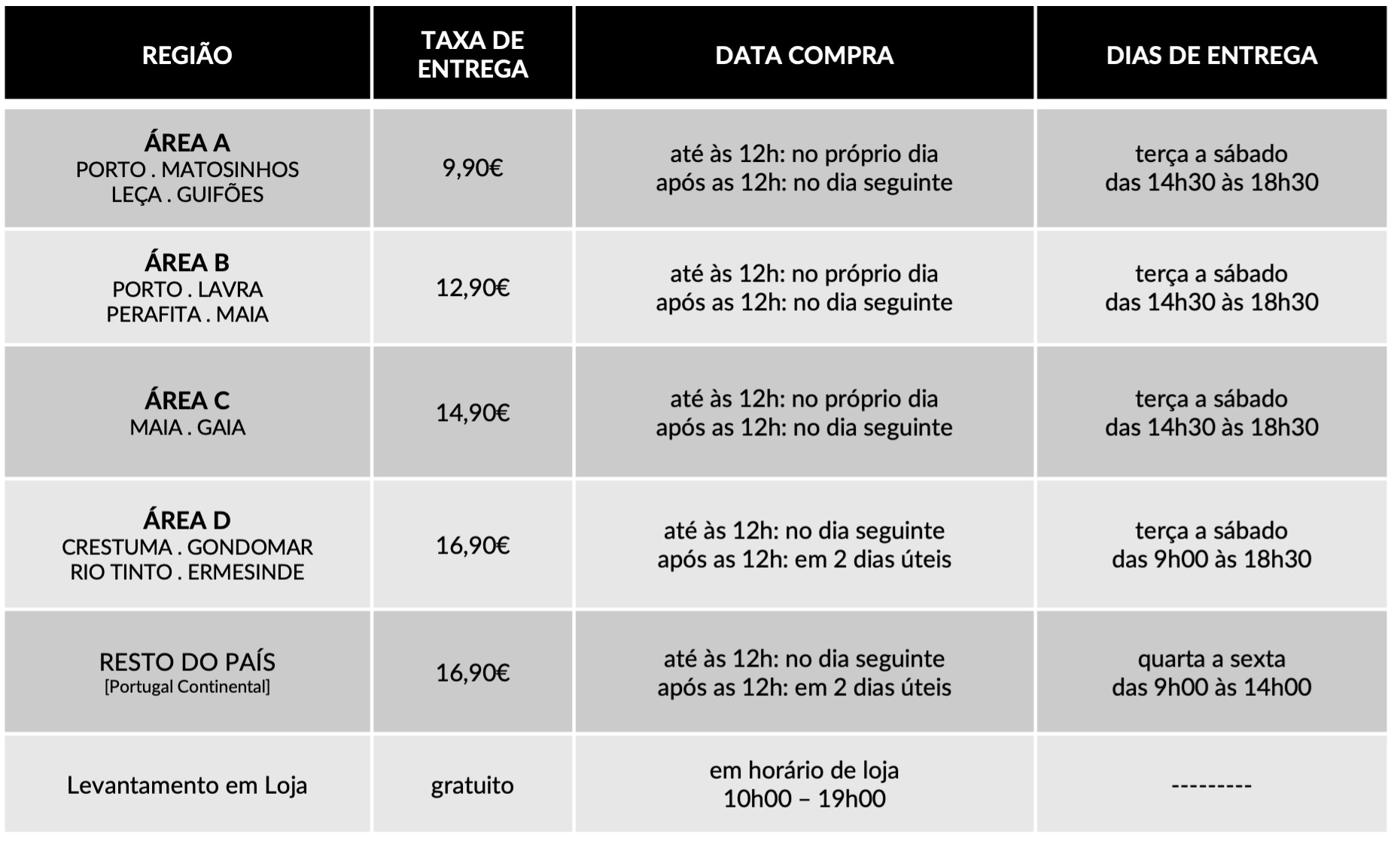
Caso não havendo outra referência dada pelo utilizador (por exemplo: deixar no porteiro, na loja x, à pessoa y) o utilizador será contactado de imediato para ficar ao corrente da situação e, à falta de alternativas, a encomenda voltará para a Terrárea, Caso seja reagendada uma nova entrega será cobrada novamente taxa de entrega.
Sublinhamos a importância dos dados fornecidos pelo utilizador estarem correctos e claros. Há sempre a possibilidade do utilizador acrescentar um ponto de referência e outras informações para que não hajam quaisquer dúvidas no acto da entrega garantindo, assim, a qualidade do serviço.
Lamentamos mas não podemos facultar essa informação, se o cliente que realizou a encomenda não pretender.
Estamos abertos a alterações embora estas estejam sempre condicionadas pelo tipo de pedido do utilizador, stock em loja e conceito estético. Nestes casos sugerimos o contacto telefónico ou por email.
Queremos satisfazer todos os nossos clientes e oferecer o nosso melhor serviço. Agradecemos, por isso, todas as opiniões e sugestões para podermos encontrar soluções às suas necessidades! Contacte-nos a partir dos seguintes meios: via email info@terrarea.pt ou telefone 223 170 414

Why Layer 2 Derivatives Are the Next Big Thing — and Why Fees Still Matter
Whoa! I remember the first time I saw a perpetual swap on a decentralized book — my brain did a weird little double-take. It felt like the future, but also like somethin’ half-baked. Traders thing: low latency, deep liquidity, censorship resistance. Investors think: capital efficiency, risk stacking, and — frankly — headaches around fees and settlement. Hmm… here’s the thing. If you don’t understand how Layer 2 scaling changes the fee math, you’re missing the main story behind why derivative markets on-chain can actually be competitive with centralized exchanges.
At a glance Layer 2s look like a simple throughput fix. They bundle transactions so L1 gas is amortized across many users. That reduces per-trade on-chain cost. But that’s only half the picture. A lot of projects treat the rollup as some magic box where fees vanish. Not true. There are tradeoffs — capital constraints, operator sequencing, and off-chain matching costs, which often translate back into spread or taker fees. Initially I thought you could just slap a rollup under an AMM and call it a day, but then I watched trading desks arbitrage through off-chain latency and realized liquidity design mattered more than raw throughput.
Trading fees in derivatives markets behave like taxes on speed. Short-term traders and market makers are especially fee-sensitive. They pay fees multiple times per day, or even per hour. So a small per-trade cost compounds quickly. On one hand, Layer 2 rollups lower base settlement fees. Though actually, wait—let me rephrase that: lower base settlement does not automatically lower effective fees. Matching engines, relayer roles, and funding payment mechanics all introduce costs that are distributed differently than simple gas per transaction.
Okay, so check this out—there are three common Layer 2 architectures people trade on: optimistic rollups, ZK-rollups, and application-specific chains or sidechains. Each one shifts cost and trust around in subtly different ways. ZK-rollups can compress state aggressively, so in theory they keep L1 interaction minimal. Optimistic rollups accept a challenge window which means exits and dispute costs look different, and that affects margin risk. Sidechains can be extremely cheap but introduce centralized sequencing risk. I’m biased toward ZK approaches for long-term settlement simplicity, but I recognize they have tooling gaps today.
One more quick thing about order books versus AMMs. Order books let you build native derivatives matching models — limit orders, iceberg orders, post-only strategies — without creating synthetic spreads through liquidity curves. That’s huge. But order books require low-latency off-chain matching, which then demands high-throughput, low-cost settlement on Layer 2. So fees get split: maker/taker marketplace fees, Layer 2 transaction fees, and sometimes withdrawal fees back to L1. These add up, and it’s easy to misread the headline “low gas!” as “low everything”.
How fees really shape derivatives strategy
My instinct said traders would flock to any venue with lower nominal fees. But human behavior is messy. Liquidity, counterparty reliability, and funding-rate dynamics matter more once you get past the first dozen trades. If your fee model penalizes tail-risk hedging, institutions won’t show up. If spreads widen because automated arbitrage is throttled by sequencing delays, retail disappears. The math is simple: effective cost = explicit fees + slippage + latency tax + capital carry. Sometimes that latency tax is bigger than the explicit gas charge.
Let’s be concrete. Imagine a rollup where settlement fees are next-to-nothing, but the matching engine introduces an insertion latency that creates micro-slippage on fast-moving markets. That slippage, multiplied over thousands of small trades, outstrips any savings you thought you had. So you fix one problem and reveal another. The answer isn’t to pick a chain and hope — it’s to measure where costs accumulate in real workflows. Seriously? Measure. Track. Repeat.
Funding payments deserve a callout. They are the invisible fees of perpetuals: money transfers between longs and shorts to keep the contract tethered to the underlying. Fee design and funding periodicity affect strategy. For example, if funding updates every minute, market makers can arbitrage tighter; but if funding updates hourly, risk windows expand and capital efficiency drops. Initially I thought hourly funding was fine — easier for users — but when vol spikes, that lag bites. On the other hand more frequent funding means more on-chain churn unless it’s handled inside Layer 2’s state.
Here’s a real-world practicality: withdrawal friction. People overlook exit costs. You can trade cheaply inside a rollup, but if it takes days to withdraw to L1 or costs a lot to force an exit, then capital gets trapped. Institutional desks hate trapped capital. (oh, and by the way… customer support hiccups are a trust tax.) That’s one reason why some desks prefer hybrid models — use Layer 2 for legs of trades, but keep settlement ropes to L1 for large exposures.
Now, about risk and leverage. Derivatives amplify both fees and operational risk. Margin models on-chain must deal with on-chain finality and socialized loss without centralized insurance. Some platforms offer cross-margining to reduce capital needs, which is great, but cross-margining raises contagion concerns. So you see safety fees — additional charges meant to deter risky position sizing. Those fees can be a feature, not a bug, if they lower systemic crises probability. I’m not 100% sure the industry has settled on the right balance yet, but the discussion is getting better.
Want a practical pick? If you’re comparing venues, look beyond raw taker/maker numbers. Check: how often does funding reprice, what’s the withdrawal latency, is there an insurance fund, and how are disputes handled? Also, find community trust signals — developer activity, audit history, and real world liquidity providers. For a good starting place on a Layer 2-native orderbook derivatives venue check the dydx official site. That link gives you a sense of an ecosystem built specifically around L2 orderbook futures (and yes, I’m not shilling — just pointing to useful reference material).
FAQ
How do Layer 2 fees compare to centralized exchange fees?
Short answer: they can be competitive, but only when you account for slippage, latency, and withdrawal costs. Centralized exchanges often subsidize fees to win market share, whereas on-chain venues internalize more costs transparently. That transparency helps long-term trust, though it sometimes looks worse on paper at first.
Will ZK-rollups fix everything?
Not overnight. ZK-rollups solve a lot of state bloat and finality questions, but tooling and complex smart contract support are still evolving. They’re promising for derivatives, but expect a transition period where multiple Layer 2 architectures coexist and specialize.
Should traders care about funding frequency?
Absolutely. Funding frequency affects capital efficiency, arbitrage windows, and risk. Align your strategy to the venue’s cadence — scalpers prefer tighter, faster funding; longer horizon traders want stability and predictable funding costs.