
FAQ
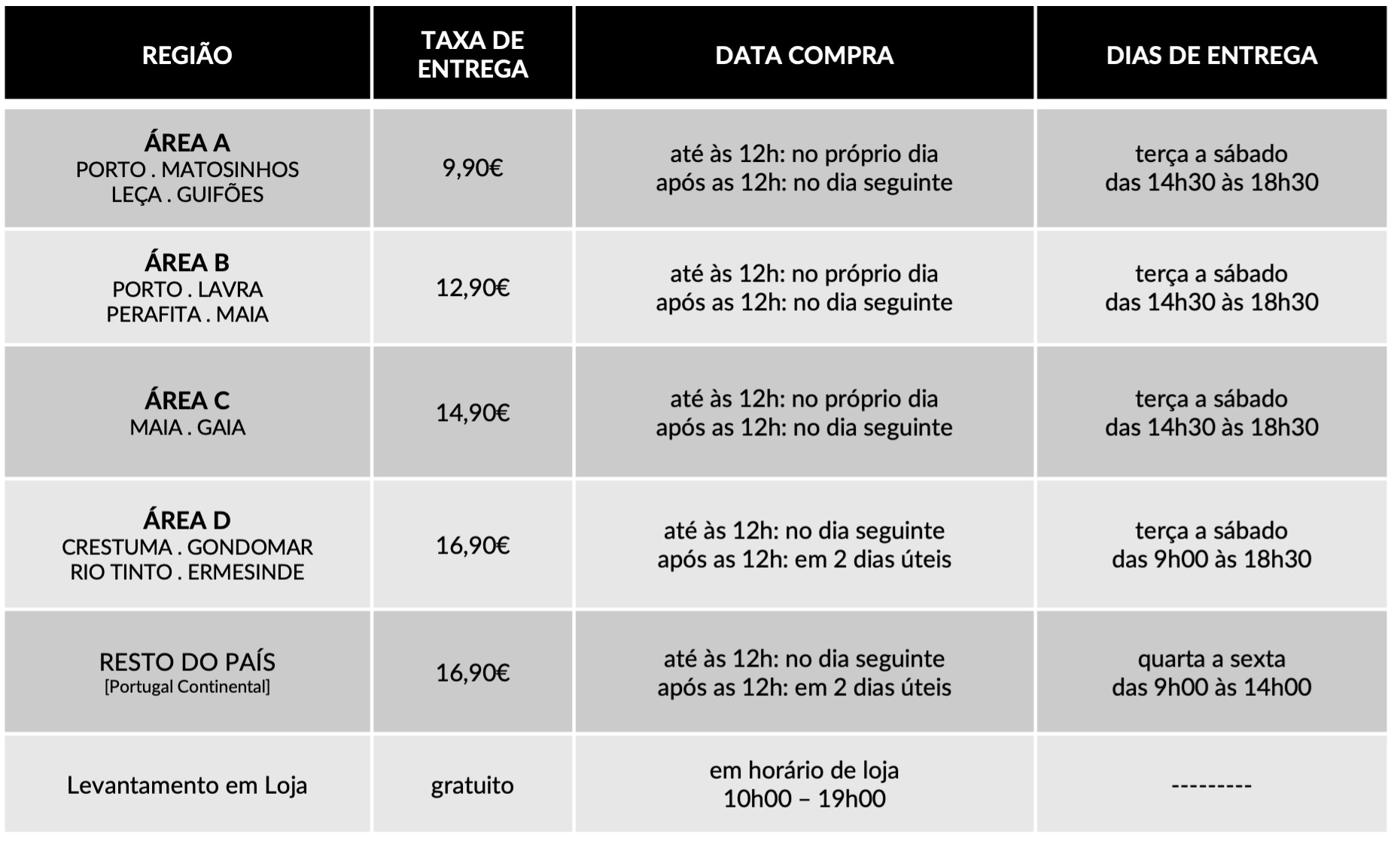
Dedicamos toda a atenção na manutenção e preservação das nossas Flores, garantindo que cheguem ao nosso cliente com toda a frescura, qualidade e beleza. Disponibilizamos várias soluções de manutenção e embalamentos adequando sempre a cada necessidade e contexto da entrega.
Pode incluir na sua oferta uma mensagem personalizada que irá ser reproduzida por nós. No processo da compra online basta preencher o campo ”dedicatória” e escrever a mensagem pretendida.
Valorizamos e priorizamos a qualidade dos serviços e dos nossos produtos. Todas as flores disponibilizadas nos ramos e arranjos disponíveis na loja online são frescas e estão em condições de servir o destinatário.
Caso haja alguma insatisfação por parte do cliente, recomendamos que utilize os nossos canais de comunicação para que possamos analisar a questão.
As fotografias são ilustrativas, quer isto dizer que não garantimos a 100% a sua fieldade com a realidade.
As fotografias devem ser interpretadas como uma base de modelo ou de estética onde as alterações estão sujeitas ao stock da flor e ao trabalho humano de cada florista. Note-se que algumas flores são sazonais e não estão disponíveis todo o ano. Como tal, serão necessárias fazer adaptações consoante a época e o stock da flor.
Para casos onde as alterações sejam extremamente notórias, contactaremos o cliente para ajustar a melhor solução.
Não cancelamos nem alteramos encomendas se esta já se encontrar em fase de curso, ou seja, se já tiver saído da loja e em fase de transporte.
Se a encomenda se encontrar no estado inicial, de processo, é possível alterar e cancelar a encomenda e reaver o seu dinheiro.
Caso não havendo outra referência dada pelo utilizador (por exemplo: deixar no porteiro, na loja x, à pessoa y) o utilizador será contactado de imediato para ficar ao corrente da situação e, à falta de alternativas, a encomenda voltará para a Terrárea, Caso seja reagendada uma nova entrega será cobrada novamente taxa de entrega.
Sublinhamos a importância dos dados fornecidos pelo utilizador estarem correctos e claros. Há sempre a possibilidade do utilizador acrescentar um ponto de referência e outras informações para que não hajam quaisquer dúvidas no acto da entrega garantindo, assim, a qualidade do serviço.
Lamentamos mas não podemos facultar essa informação, se o cliente que realizou a encomenda não pretender.
Estamos abertos a alterações embora estas estejam sempre condicionadas pelo tipo de pedido do utilizador, stock em loja e conceito estético. Nestes casos sugerimos o contacto telefónico ou por email.
Queremos satisfazer todos os nossos clientes e oferecer o nosso melhor serviço. Agradecemos, por isso, todas as opiniões e sugestões para podermos encontrar soluções às suas necessidades! Contacte-nos a partir dos seguintes meios: via email info@terrarea.pt ou telefone 223 170 414

Why Trading Volume and DEX Aggregators Matter — A Trader’s Practical Guide
Okay, so check this out — most DeFi conversations start and end on price. But trading volume? That’s the heartbeat. It tells you whether a move is meaningful or just noise. My first instinct with any new token is to squint at the volume charts; it’s rarely wrong.
Traders and liquidity providers care about different things, true. But both need reliable, real-time signals. Volume (and how it flows across pools and chains) uncovers momentum, liquidity depth, and risk of being picked off by slippage or MEV. Here’s a practical look at how DeFi protocols, DEX aggregators, and trading volume interact — and how to use that knowledge without getting burned.
Short version: volume validates moves. Medium version: volume plus liquidity routing tells you if a price trend can sustain. Long version: when you combine volume, routing paths, slippage tolerance, and on-chain mempool visibility, you get an edge that’s actionable in seconds but requires setup and discipline to use well.
DeFi Protocols and Why Volume Means Different Things
Not all DeFi protocols are the same. Automated market makers (AMMs) like Uniswap clones use constant product formulas, while order-book style DEXs or hybrid designs behave differently under stress. Volume on an AMM affects price impact directly — a big trade in a shallow pool will move the price a lot. Volume on a deeper, multi-asset pool might be absorbed with less slippage.
Volume spikes can signal real accumulation, wash trading, or a coordinated liquidity event. So context matters. Check who’s providing the liquidity, track token contract interactions, and watch treasury or team wallets. Those patterns often explain sudden surges better than a price chart alone.
Oh, and by the way — on-chain volume is more transparent than centralized exchange data, but it’s also noisier. Wash trades are easier to spot if you know what on-chain flags to look for (repeated address patterns, self-swaps, or batch transactions routed through the same accounts).
What DEX Aggregators Do — And Why Traders Use Them
DEX aggregators route your trade across multiple liquidity sources to get better prices and lower slippage. Instead of hitting a single pool, the aggregator slices your order and sends pieces to several pools or chains, optimizing price and gas. That’s the promise. In practice, the difference between a smart router and a naive one can be tens of basis points — sometimes way more during volatility.
Aggregators also factor in gas and cross‑chain bridges. A route that looks cheap on raw token price might cost more once gas and bridge fees are added. Good aggregators therefore run a net-cost calculation and pick the path that maximizes received tokens, not just the cheapest on-chain price. That’s important for traders who run tight edge calculations.
If you want a quick reference tool for watching token-level liquidity and minute-by-minute volume, I use a real-time scanner pretty often — check the dexscreener official site for live token feeds and immediate volume alerts. It’s not the only tool, but it’s solid for spotting quick spikes and new listings.
Trading Volume: Metrics That Actually Help You
Volume by itself is just a number. Useful analysis asks: relative to what? Here are practical metrics I check every trade.
Use these to gauge intent. A project with steady volume growth and increasing unique wallets likely has organic adoption. A huge single-day spike with low wallet diversity? Caveat emptor.
Risks: Slippage, MEV, and Liquidity Pulls
Small pools and aggressive taker orders invite problems. Slippage is the obvious one: you set tolerance to 0.5% and then a routed path executes at 3% because the aggregator mispriced gas or a pool drained mid-route. Then there’s MEV (miner/validator/executor extractable value). Front-runs and sandwich attacks are real threats in thin markets; they can turn a profitable-looking trade into a loss after fees.
Liquidity pulls are nastier. Protocols can be rug-rolled or simply have providers remove liquidity en masse, causing large price swings. Watch on-chain liquidity changes closely, and consider size scaling (enter smaller, scale larger) for new or low-liquidity tokens.
How to Use Volume Signals in Your Strategy
All strategies are trade-offs. Here’s how I approach volume-based decisions:
In short: respect volume, but verify context. I’m biased toward conservative entries when liquidity is thin. That approach has saved me from some brutal slippage nights.
Tools and Workflows
Your setup matters. I run a mix of on-chain dashboards, aggregator UIs, and local scripts that monitor mempool activity. Alerts push to my phone for sudden volume + liquidity changes. If you’re trading frequently, automate the boring parts: route comparison, slippage checks, and gas estimation.
There are several aggregators and analytics sites. For immediate token feed monitoring and quick eyeballing of volume changes, the dexscreener official site is a fast way to see live activity across pairs. Combine that with a wallet tracker and a block explorer to build a quick verification checklist before committing capital.
Quick FAQs
How much volume is “enough” to trade a token safely?
Depends on order size and pool depth. As a rule of thumb: your intended trade should be less than 1% of pooled liquidity for low-slippage on AMMs. If that’s not possible, split the trade or use an aggregator that can route across pools.
Can aggregators protect me from MEV?
Some do offer MEV-protective routing or private relay options, but protection is not perfect. Combining MEV-aware routes with modest order sizing and cautious slippage settings helps. Also, consider using aggregators that support transaction bundling or submit via relays when the attack surface is high.
What’s more reliable: TVL or volume?
They measure different things. TVL shows committed liquidity and long-term confidence. Volume shows market activity and short-term interest. Use both: TVL to understand depth and sustainability, volume to detect momentum and immediate risk.