
FAQ
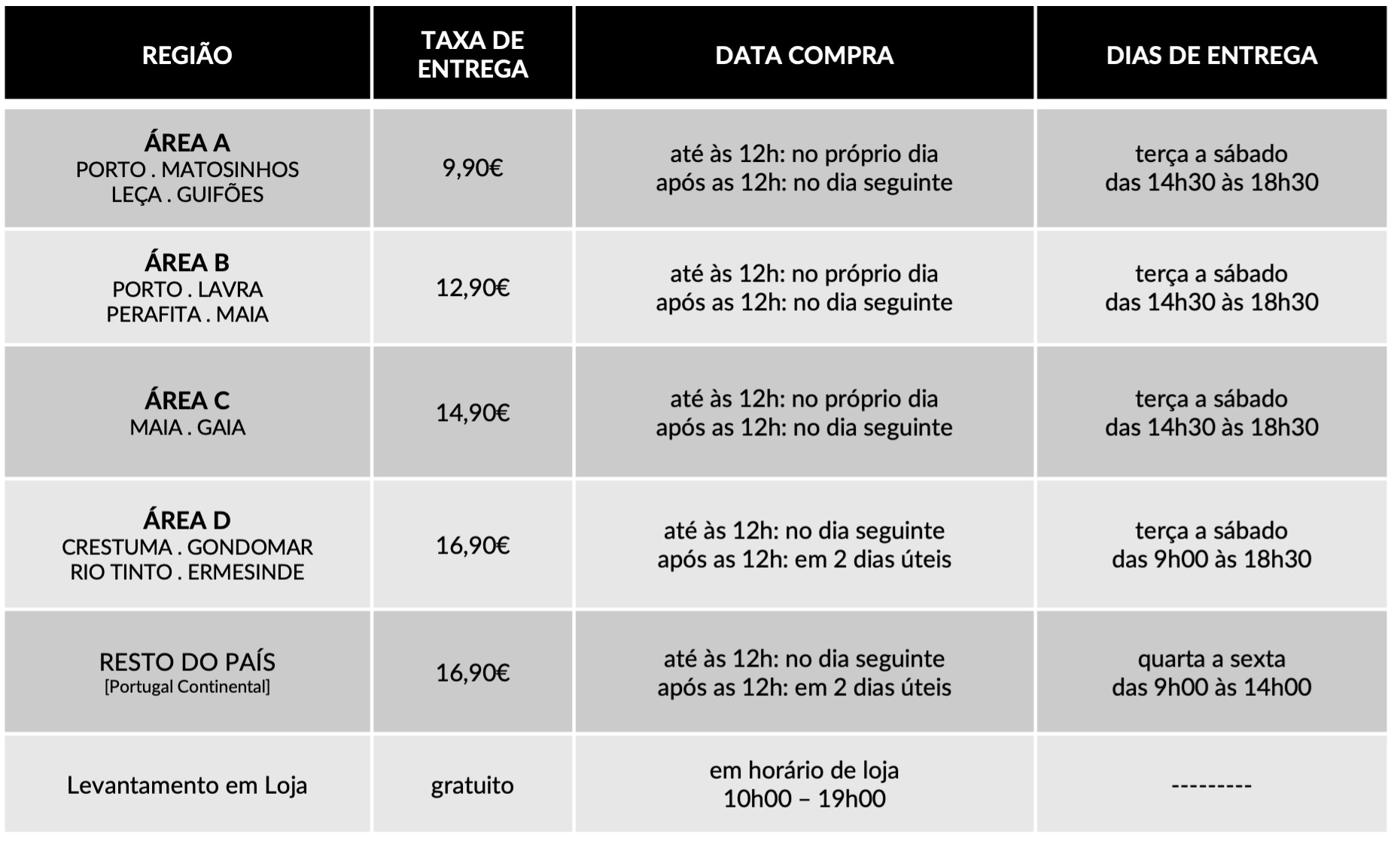
Dedicamos toda a atenção na manutenção e preservação das nossas Flores, garantindo que cheguem ao nosso cliente com toda a frescura, qualidade e beleza. Disponibilizamos várias soluções de manutenção e embalamentos adequando sempre a cada necessidade e contexto da entrega.
Pode incluir na sua oferta uma mensagem personalizada que irá ser reproduzida por nós. No processo da compra online basta preencher o campo ”dedicatória” e escrever a mensagem pretendida.
Valorizamos e priorizamos a qualidade dos serviços e dos nossos produtos. Todas as flores disponibilizadas nos ramos e arranjos disponíveis na loja online são frescas e estão em condições de servir o destinatário.
Caso haja alguma insatisfação por parte do cliente, recomendamos que utilize os nossos canais de comunicação para que possamos analisar a questão.
As fotografias são ilustrativas, quer isto dizer que não garantimos a 100% a sua fieldade com a realidade.
As fotografias devem ser interpretadas como uma base de modelo ou de estética onde as alterações estão sujeitas ao stock da flor e ao trabalho humano de cada florista. Note-se que algumas flores são sazonais e não estão disponíveis todo o ano. Como tal, serão necessárias fazer adaptações consoante a época e o stock da flor.
Para casos onde as alterações sejam extremamente notórias, contactaremos o cliente para ajustar a melhor solução.
Não cancelamos nem alteramos encomendas se esta já se encontrar em fase de curso, ou seja, se já tiver saído da loja e em fase de transporte.
Se a encomenda se encontrar no estado inicial, de processo, é possível alterar e cancelar a encomenda e reaver o seu dinheiro.
Caso não havendo outra referência dada pelo utilizador (por exemplo: deixar no porteiro, na loja x, à pessoa y) o utilizador será contactado de imediato para ficar ao corrente da situação e, à falta de alternativas, a encomenda voltará para a Terrárea, Caso seja reagendada uma nova entrega será cobrada novamente taxa de entrega.
Sublinhamos a importância dos dados fornecidos pelo utilizador estarem correctos e claros. Há sempre a possibilidade do utilizador acrescentar um ponto de referência e outras informações para que não hajam quaisquer dúvidas no acto da entrega garantindo, assim, a qualidade do serviço.
Lamentamos mas não podemos facultar essa informação, se o cliente que realizou a encomenda não pretender.
Estamos abertos a alterações embora estas estejam sempre condicionadas pelo tipo de pedido do utilizador, stock em loja e conceito estético. Nestes casos sugerimos o contacto telefónico ou por email.
Queremos satisfazer todos os nossos clientes e oferecer o nosso melhor serviço. Agradecemos, por isso, todas as opiniões e sugestões para podermos encontrar soluções às suas necessidades! Contacte-nos a partir dos seguintes meios: via email info@terrarea.pt ou telefone 223 170 414

Why your DeFi workflow feels fragile — and how to fix it with smarter tooling
Whoa, seriously, check this out!
I’ve been watching DeFi users wrestle with gas, approvals, and opaque contract calls for years now.
At first glance the tools look fine to most people, but my gut kept nagging at me.
Something felt off about the way transactions were executed without rehearsal or a safety net.
Over time I started testing every wallet flow I could get my hands on, slowly building a set of expectations that were stricter than industry norms.
Hmm… this is where it gets interesting.
Many wallets show balances and histories, yet they rarely simulate the transaction effects before signing.
That missing rehearsal step is a silent risk, and it bites when contracts behave unexpectedly.
On one hand people blame “smart contracts” as if they misbehave by hobby; though actually the root is often opaque UX and unsafe defaults in toolchains.
Initially I thought a single permission prompt would be enough, but then realized that permissions compound and sometimes cascade into very different states than users expect.
Whoa, wait—let me rephrase that quickly.
Permissions and interactions are composable, and they chain in ways that are hard to visualize without tooling.
So you sign something, and a second transaction becomes possible because an approval happened earlier.
That second action may be what actually drains funds, not the first benign-looking approval.
I’ve seen this pattern again and again in audits and real incidents, and the fix isn’t more warnings—it’s better simulation and clearer intent modeling when interacting with contracts.
Really? Yes, really.
Consider portfolio tracking for a second: balances snapshots are useful, but futures and pending states tell a very different story.
Tracking unconfirmed state changes and potential reorgs matters when you care about TVL and short windows of arbitrage.
My instinct said “alerts will do it”, but alerts without causal context are noise more often than not.
What helped more was a wallet that could show me the post-condition of a transaction before I hit confirm, giving me a mental model of the end state.
Here’s the thing.
Simulation isn’t only about gas estimation or a success/fail flag.
It’s about showing token flows, allowance changes, and how a sequence of calls mutates your on-chain positions.
When you can see the token delta and the contract state delta before signing, your cognitive load drops a lot.
You start catching edge cases you wouldn’t otherwise, like a contract that transfers via a proxy or emits events that trigger other services.
Whoa, this next bit surprised me.
Smart contract interactions are often explained as if they’re atomic and simple, but they are rarely so.
There are cross-contract calls, fallback functions, and reentrancy paths that a naive signer will never picture.
I’m biased, but I think a good wallet should visualize those call graphs in a human-friendly way.
Doing so reveals attack surfaces and unintended side-effects, which is hugely valuable for active DeFi users.
Okay, so check this out—
Transaction simulation gives power to users, but the simulation itself must be trustworthy and reproducible.
Off-chain heuristics that guess outcomes are fine for rough ideas, but deterministic EVM simulation tied to node state is far better for accuracy.
On a related note, UX that hides simulation results behind jargon or tiny icons is almost worse than no simulation at all.
Users deserve clarity, big obvious explanations, and the ability to inspect the exact calldata and expected token movements before confirming.
Whoa, I’m getting nerdy here.
But, honestly, the difference between a wallet that just “sends” and one that rehearses transactions is night and day.
I’ve stopped recommending certain tools to colleagues simply because their signing flows are blind and irreversible in practice.
They make it easy to click through danger, which is a weird design choice for money management apps.
One time I watched a friend almost lose funds because an approval box was prechecked in some third-party UI; that memory stuck with me.
Seriously? Yeah—real world stories matter.
Users who trade, bridge, and farm need to know effective balances after pending operations, not just current holdings.
Portfolio trackers that factor in pending swaps and escrowed tokens make better decisions possible.
And those trackers should integrate with your wallet’s simulations so you can see “if I confirm this, my leverage looks like X”.
That integrated view cuts down surprises and helps users avoid cascading liquidations or sloppy position management.
Whoa, here’s a tangent (oh, and by the way…)
Bridging flows are a special brand of messy because they introduce off-chain bridge operators and time delays.
Simulation can at least surface the on-chain handoffs and whether approvals are one-time or unlimited.
Seeing that allows users to choose a safer path, sometimes by doing manual time-limited approvals or splitting transfers.
These small choices save people from very bad mornings when a bridge operator hiccups and funds enter limbo.
Okay, I’m circling back now.
Security features in wallets shouldn’t be optional geekery reserved for power users.
Things like transaction simulation, allowance management, and call graph visualization should be default behaviors.
They lower the bar for safe behavior and make DeFi less of a minefield for new entrants who are already juggling gas math and slippage percentages.
I’m not 100% sure that the whole ecosystem will normalize this quickly, but momentum is growing in the right direction.
Whoa, check this practical note.
If you’re trying to level up your DeFi safety, start by choosing tooling that integrates simulation with signing workflows.
That way you don’t have to juggle separate apps and mental models when making decisions.
I started using a wallet that simulated calls inline and showed token deltas, and it immediately reduced stupid mistakes I used to make.
If you want to try a wallet that focuses on transaction clarity and security, try rabby wallet—it was designed with these exact pain points in mind.
Practical checklist for safer DeFi interaction
Whoa, quick checklist, short and usable.
1) Always preview transaction simulations and inspect token deltas before signing.
2) Prefer time-limited or single-use approvals when possible.
3) Use portfolio tracking that reflects pending state changes and pending swaps.
4) Watch for proxy calls and nested transfers in the simulated call graph; they often hide risk.
5) Consider wallets that let you revoke approvals easily and simulate multi-step flows.
FAQ
How reliable are transaction simulations?
Simulations that run against current node state and execute the exact calldata are the most reliable, though they can be affected by mempool changes and chain reorgs; treat them as highly informative, not absolute guarantees.
Do simulations add latency to signing?
They can add a few hundred milliseconds to a couple seconds depending on the complexity of calls and node response times, but the slight delay is worth the reduction in risk and cognitive overhead.
Can simulations prevent phishing or scam contracts?
Simulations help by revealing unexpected token movements and allowance changes, but they don’t replace vigilance for malicious UIs or social-engineered signatures—combining simulations with safe browsing habits is best.