
FAQ
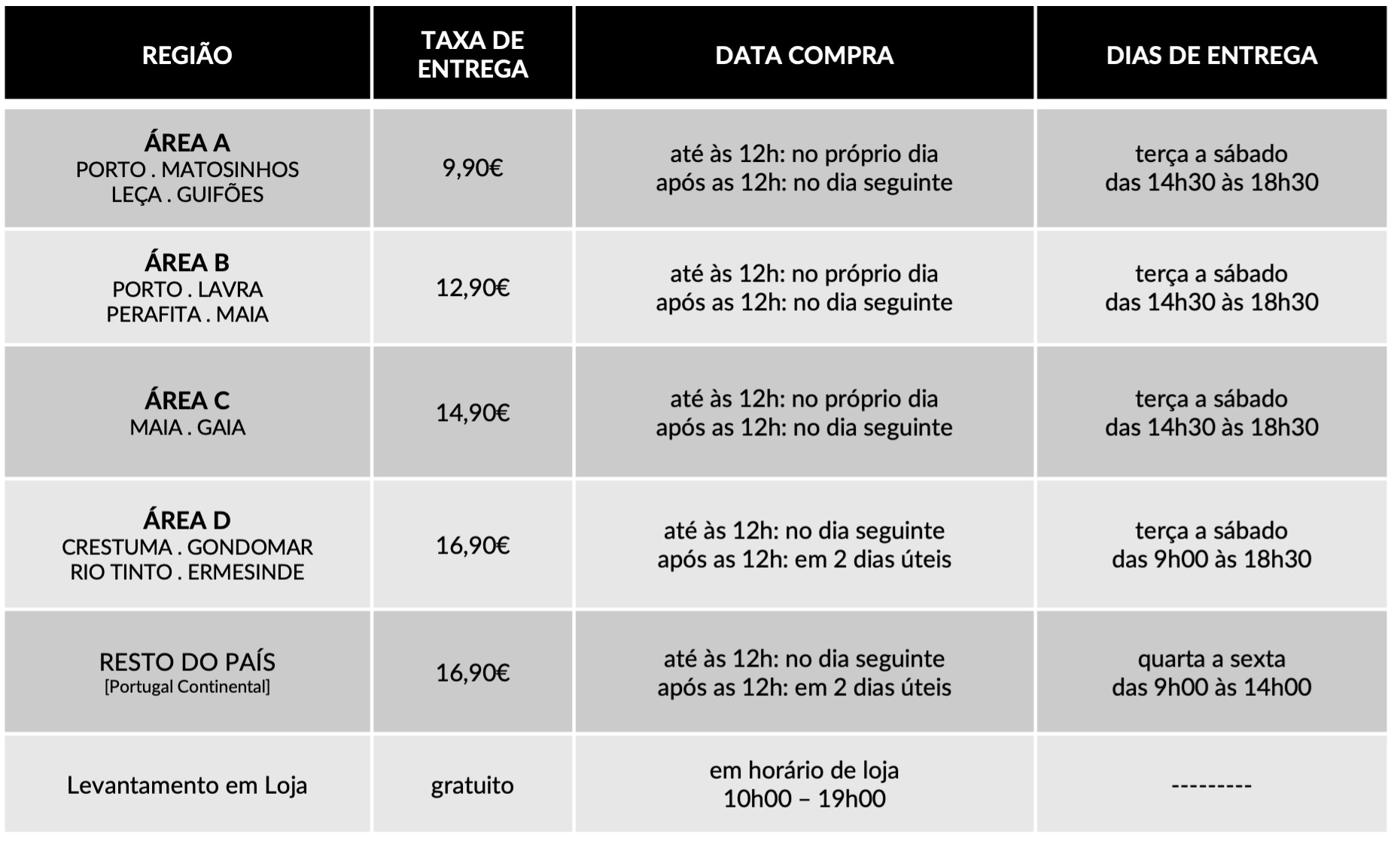
Dedicamos toda a atenção na manutenção e preservação das nossas Flores, garantindo que cheguem ao nosso cliente com toda a frescura, qualidade e beleza. Disponibilizamos várias soluções de manutenção e embalamentos adequando sempre a cada necessidade e contexto da entrega.
Pode incluir na sua oferta uma mensagem personalizada que irá ser reproduzida por nós. No processo da compra online basta preencher o campo ”dedicatória” e escrever a mensagem pretendida.
Valorizamos e priorizamos a qualidade dos serviços e dos nossos produtos. Todas as flores disponibilizadas nos ramos e arranjos disponíveis na loja online são frescas e estão em condições de servir o destinatário.
Caso haja alguma insatisfação por parte do cliente, recomendamos que utilize os nossos canais de comunicação para que possamos analisar a questão.
As fotografias são ilustrativas, quer isto dizer que não garantimos a 100% a sua fieldade com a realidade.
As fotografias devem ser interpretadas como uma base de modelo ou de estética onde as alterações estão sujeitas ao stock da flor e ao trabalho humano de cada florista. Note-se que algumas flores são sazonais e não estão disponíveis todo o ano. Como tal, serão necessárias fazer adaptações consoante a época e o stock da flor.
Para casos onde as alterações sejam extremamente notórias, contactaremos o cliente para ajustar a melhor solução.
Não cancelamos nem alteramos encomendas se esta já se encontrar em fase de curso, ou seja, se já tiver saído da loja e em fase de transporte.
Se a encomenda se encontrar no estado inicial, de processo, é possível alterar e cancelar a encomenda e reaver o seu dinheiro.
Caso não havendo outra referência dada pelo utilizador (por exemplo: deixar no porteiro, na loja x, à pessoa y) o utilizador será contactado de imediato para ficar ao corrente da situação e, à falta de alternativas, a encomenda voltará para a Terrárea, Caso seja reagendada uma nova entrega será cobrada novamente taxa de entrega.
Sublinhamos a importância dos dados fornecidos pelo utilizador estarem correctos e claros. Há sempre a possibilidade do utilizador acrescentar um ponto de referência e outras informações para que não hajam quaisquer dúvidas no acto da entrega garantindo, assim, a qualidade do serviço.
Lamentamos mas não podemos facultar essa informação, se o cliente que realizou a encomenda não pretender.
Estamos abertos a alterações embora estas estejam sempre condicionadas pelo tipo de pedido do utilizador, stock em loja e conceito estético. Nestes casos sugerimos o contacto telefónico ou por email.
Queremos satisfazer todos os nossos clientes e oferecer o nosso melhor serviço. Agradecemos, por isso, todas as opiniões e sugestões para podermos encontrar soluções às suas necessidades! Contacte-nos a partir dos seguintes meios: via email info@terrarea.pt ou telefone 223 170 414

How HFT, Isolated Margin, and Smart Algorithms Change the Game for DEX Liquidity
Wow! High-frequency trading on DEXs feels like the Wild West to many. I’m biased, but I’ve been in crypto market microstructure for a long time. Initially I thought on-chain execution couldn’t match centralized venues in latency and reliability, but then I started experimenting with geographically distributed nodes, flash order rerouting, and isolated-margin setups that blurred that gap under certain conditions. The practical hurdles remain very real and operationally costly.
Really? Yep—serious trading firms already run arbitrage bots across chains. They stitch liquidity pools, AMMs, and matching engines into hybrid pipelines. On paper you can architect sub-millisecond strategies by combining keeper relays, off-chain pre-signing, and isolated margin where you control collateral per strategy, yet the real-world constraints of mempool dynamics and gas variability force continuous adaptation and backtesting. Maintaining a durable edge requires relentless instrumentation and trade simulation.
Whoa! Isolated margin changes the calculus entirely for HFT on DEXs. You can quarantine risk to a strategy rather than across a whole wallet. That permit lets aggressive market making use much tighter spreads because the liquidation path is narrower and the protocol-level incentives can be tuned per instrument, although that tuning introduces complexity and often requires governance coordination or multi-sig ops. My instinct said it would be clean, but reality is messier—somethin’ you can’t ignore.
Hmm… Network latency and execution jitter still matter a lot. Colocating validators and using private relays materially reduces network hops and variance. Still, there’s a trade-off between centralization of execution (which lowers latency) and the decentralization ethos many LPs expect, so you end up with hybrid designs that try to preserve on-chain settlement while accelerating the critical path off-chain. Operational risk increases quickly as systems grow more complex and stateful.
Seriously? Algorithm design matters far more than fee rebates alone in tight markets. Adaptive spread models, predictive gas pricing, and cross-chain latency forecasts are core. I’ve seen strategies fail when they treated gas like a constant, or when they relied on ephemeral liquidity that evaporated under stress, which means robust slippage models and dynamic rebalancing are non-negotiable for live deployment. Backtests will mislead you unless you explicitly model adversarial actors and fee dynamics.
Here’s the thing. Isolated margin enables per-strategy collateralization, and that capability is a huge operational benefit. You cap a bot’s downside without choking other positions. Practically, that means you can run dozens of microstrategies with independent risk budgets and liquidation curves, but you must instrument margin calls, on-chain dispute resolution, and fail-safe unwinds to prevent cascade failures across correlated pools. This adds cost, though, in monitoring and capital immobilization—very very real costs.
Wow! Trade routing acts like a quiet multiplier for profits in HFT. Smart routers consider slippage, fees, depth, gas, and expected time to settlement. Where many teams underperform is in failing to model the feedback loops—how your own trades shift the pool, how MEV extractors react, and how counter-parties adjust spreads when volatility spikes—so your router must be both predictive and conservative under tail risk. I admit my gut worried about MEV at first, and honestly it still bugs me.
Practical tip and a reference
Really? Deployment patterns differ substantially between EVMs and layer-2s given their gas models. You pick tools depending on the instrumentation you can maintain. If you care about institutional-grade liquidity and custody, then you also factor in auditability, margin recovery processes, and the ability to pause strategies without creating arbitrageable windows that predators will exploit—those are operational design constraints, not just theoretical ones. Check this out—I’ve been running experiments that use hybrid on-chain settlement and off-chain price discovery, and one good place to glance for design ideas is the hyperliquid official site.
Whoa! Oh, and by the way… deploying anything at scale exposes cultural and operational challenges. Initially I thought governance would be the slowest part, but actually coordination and playbook drills eat the most time. On one hand you want nimble updates; on the other hand you need documented fail-safes and auditors who can read your intent. I’m not 100% sure of every pattern, but the winning teams combine strong engineering with clear operational SOPs.
FAQ
How does isolated margin reduce systemic risk?
Isolated margin ties collateral to a specific strategy or position, so a liquidation event affects only that bucket instead of draining a master wallet. That limits contagion, allows granular risk limits, and makes automated unwind logic simpler to reason about, though it increases capital fragmentation and monitoring overhead.
Can HFT strategies on DEXs match CEX performance?
Sometimes they can approach it for certain strategies when hybrid architectures are used—off-chain routing, private relays, and pre-signed transactions can lower latency. However, microsecond-level advantages still favor centralized venues for some tactics, and on-chain settlement adds finality and transparency trade-offs that may be desirable depending on your counterparty and compliance needs.