
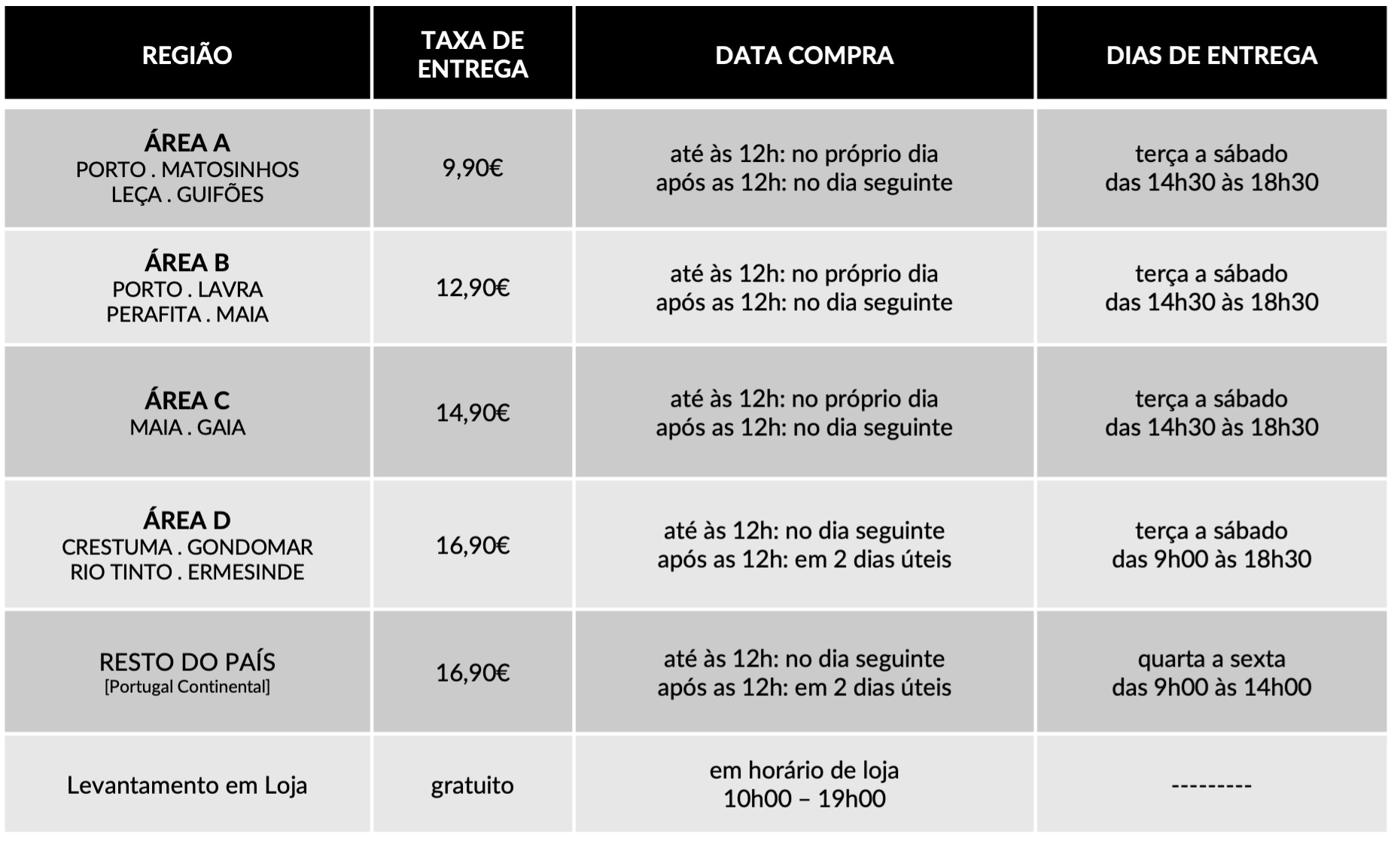
FAQ
Dedicamos toda a atenção na manutenção e preservação das nossas Flores, garantindo que cheguem ao nosso cliente com toda a frescura, qualidade e beleza. Disponibilizamos várias soluções de manutenção e embalamentos adequando sempre a cada necessidade e contexto da entrega.
Pode incluir na sua oferta uma mensagem personalizada que irá ser reproduzida por nós. No processo da compra online basta preencher o campo ”dedicatória” e escrever a mensagem pretendida.
Valorizamos e priorizamos a qualidade dos serviços e dos nossos produtos. Todas as flores disponibilizadas nos ramos e arranjos disponíveis na loja online são frescas e estão em condições de servir o destinatário.
Caso haja alguma insatisfação por parte do cliente, recomendamos que utilize os nossos canais de comunicação para que possamos analisar a questão.
As fotografias são ilustrativas, quer isto dizer que não garantimos a 100% a sua fieldade com a realidade.
As fotografias devem ser interpretadas como uma base de modelo ou de estética onde as alterações estão sujeitas ao stock da flor e ao trabalho humano de cada florista. Note-se que algumas flores são sazonais e não estão disponíveis todo o ano. Como tal, serão necessárias fazer adaptações consoante a época e o stock da flor.
Para casos onde as alterações sejam extremamente notórias, contactaremos o cliente para ajustar a melhor solução.
Não cancelamos nem alteramos encomendas se esta já se encontrar em fase de curso, ou seja, se já tiver saído da loja e em fase de transporte.
Se a encomenda se encontrar no estado inicial, de processo, é possível alterar e cancelar a encomenda e reaver o seu dinheiro.
Caso não havendo outra referência dada pelo utilizador (por exemplo: deixar no porteiro, na loja x, à pessoa y) o utilizador será contactado de imediato para ficar ao corrente da situação e, à falta de alternativas, a encomenda voltará para a Terrárea, Caso seja reagendada uma nova entrega será cobrada novamente taxa de entrega.
Sublinhamos a importância dos dados fornecidos pelo utilizador estarem correctos e claros. Há sempre a possibilidade do utilizador acrescentar um ponto de referência e outras informações para que não hajam quaisquer dúvidas no acto da entrega garantindo, assim, a qualidade do serviço.
Lamentamos mas não podemos facultar essa informação, se o cliente que realizou a encomenda não pretender.
Estamos abertos a alterações embora estas estejam sempre condicionadas pelo tipo de pedido do utilizador, stock em loja e conceito estético. Nestes casos sugerimos o contacto telefónico ou por email.
Queremos satisfazer todos os nossos clientes e oferecer o nosso melhor serviço. Agradecemos, por isso, todas as opiniões e sugestões para podermos encontrar soluções às suas necessidades! Contacte-nos a partir dos seguintes meios: via email info@terrarea.pt ou telefone 223 170 414

Why a Desktop Bitcoin Wallet with Built-in Exchange Makes Sense (and Why I Use One)
Whoa!
I’m sitting at my desk, thinking about desktop crypto wallets.
They used to feel clunky and technical for normal people.
Initially I thought security had to mean sacrifice — you know, usability sacrificed at the altar of cold storage — but then realized modern desktop wallets balance both, offering multi-asset vaults with built-in swaps and neat UX that actually invites use rather than repels it.
My instinct said be cautious, though, because I’ve seen apps promise simplicity and then hide fees or private keys in menus that are hard to find, which left a sour taste and a small pile of lost patience.
Seriously?
Yes, seriously, desktop wallets have matured faster than many expected.
Users want one place for Bitcoin, tokens, and swaps.
That demand pushed developers to integrate built-in exchanges directly into apps, which means you can swap assets without sending coins elsewhere, reducing friction and surface area for mistakes or phishing attacks.
On the other hand, bundling exchange services introduces complexities around custody, liquidity, and fee transparency, so the quality of the implementation matters a lot.
Hmm…
Here’s what bugs me about many desktop wallets on the market.
They hide fees or obscure how keys are managed.
Sometimes the UI looks slick but the app phones home with telemetry that isn’t clearly disclosed, or the seed backup flow is buried under settings that most users won’t touch until it’s too late.
I value privacy and control, and I think any multi-asset solution should make key custody explicit and easy to audit for yourself, not just promise it in a whitepaper.
Okay, so check this out—
I tested a handful of desktop wallets over the last year.
I focused on Bitcoin support, token breadth, and swap UX.
Some performed well on one axis but poorly on others, highlighting trade-offs between decentralization, speed, and convenience, and that trade-off is often a user-experience problem rather than a purely technical one.
Initially I prioritized decentralization only, but then I realized that without accessible UX, users won’t secure their keys properly, which defeats the purpose of a decentralized tool in real-world adoption.
Whoa!
One desktop wallet stood out to me in practice.
It supports Bitcoin natively and a wide set of tokens.
It bundles a built-in exchange that’s straightforward, shows fees up front, and keeps private keys on your machine rather than in a server, which gives you both convenience and non-custodial security when implemented right.
I used it for day-to-day small trades and for long-term holdings, and the balance between safety and usability felt intentional rather than accidental.
I’m biased, but…
I’m biased because I’ve used many wallets since 2016.
Experience teaches you where interfaces break and where they shine.
My instinct said trust apps that make seed backups easy, that clearly separate trading from custody, and that surface permissions logically, and the ones that hide these basics are red flags for me.
Actually, wait—let me rephrase that: a wallet can be cutting-edge and still keep those fundamentals front-and-center, but it takes thoughtful product design and a respect for users’ lack of time and crypto fluency.
Why I recommend exodus
Check this out—
I ended up using exodus as my daily desktop wallet.
It balances Bitcoin support, multi-asset coverage, and an in-app exchange.
They show swap fees and let you hold keys locally, with a recovery flow that’s straightforward for non-technical people, so onboarding friends has been painless when I recommend it.
Of course it’s not perfect — no app is — but it’s a solid starting point if you want convenience without immediately surrendering custody.
Here’s the thing.
If you’re choosing a desktop multi-asset wallet, prioritize a few things.
Security model, recovery flow, fees, and built-in exchange transparency.
Don’t accept vague claims like ‘secure’ or ‘best rates’—look for concrete explanations about how private keys are stored, whether transactions can be signed offline, and how the swap provider sources liquidity.
On the flip side, user-friendliness matters—if a friend can’t learn to send and backup in ten minutes, the wallet’s security features won’t matter because they’ll make mistakes or avoid using it altogether.
Really?
Yes, fees and spreads matter more than you probably think during swaps.
Look for upfront fee breakdowns and clear exchange partners.
Some wallets mask fees inside rates or use affiliate providers that widen spreads, which is fine if disclosed, but really annoying when hidden, because it eats your gains quietly.
Also consider network fees for Bitcoin — those are separate from swap fees and can be significant during congestion, so a wallet that simulates final costs before confirming a swap is far more useful.
Something felt off about…
I noticed some wallets display token balances but not provenance.
That makes it hard to reconcile trades during disputes.
Ask whether the wallet supports transaction history exports, CSVs, or external block explorers, because reconciling taxes and audits without that access becomes painful very quickly.
If you plan to hold Bitcoin long-term, prefer wallets that let you connect hardware keys for cold storage and which validate transactions independently rather than relying solely on app servers.
I’m not 100% sure, but…
There are trade-offs with every architectural path a wallet takes.
Hybrid models can improve UX but add custody risk.
Be skeptical when an app claims non-custodial yet asks you to upload your seed to a ‘cloud backup’ service, because that negates the point of local key control and introduces another attack vector.
On the other hand, pure cold storage is cumbersome for trading small amounts daily, so evaluate based on how actively you’ll manage assets.
Okay, one last practical layer.
Make backups. Seriously—do it.
Write your seed on paper, test recovery, and consider hardware keys for your core Bitcoin holdings.
For smaller, tradable balances keep them in your desktop wallet for convenience, but treat the app like an unlocked drawer — useful for daily use, but not where you keep your life savings unless it’s air-gapped or hardware-protected.
Somethin’ about balance matters here; very very important to separate long-term custody from short-term liquidity.
FAQ
Q: Is a desktop wallet safer than a mobile wallet?
A: It depends. Desktop wallets can be safer if you use a dedicated machine, avoid malware, and pair with hardware keys. Though actually, your mobile wallet can be secure too if you practice good hygiene (updated OS, minimal apps, hardware-backed keystore). On one hand desktops give more control for advanced users; on the other hand they can be more exposed if the machine is used for risky browsing.
Q: Can I swap Bitcoin directly in a desktop wallet?
A: Yes—many multi-asset desktop wallets include built-in exchange or swap integrations so you can trade without moving funds to external exchanges. Check fee transparency and liquidity sources first, and be mindful of on-chain fees that may apply when the swap requires Bitcoin network confirmations.
Alright, I’m wrapping this up with a small confession—
I’m cautiously optimistic about the current crop of desktop wallets because they finally treat UX and custody as co-equals rather than opposites.
There’s still a lot to watch for, but if you follow the basics and keep backups, you can get the best of both worlds: convenience for trades and solid control over your Bitcoin and tokens.
Go out, try things, but guard your keys like they’d pay your rent — because in crypto, they literally do.