
FAQ
Dedicamos toda a atenção na manutenção e preservação das nossas Flores, garantindo que cheguem ao nosso cliente com toda a frescura, qualidade e beleza. Disponibilizamos várias soluções de manutenção e embalamentos adequando sempre a cada necessidade e contexto da entrega.

Pode incluir na sua oferta uma mensagem personalizada que irá ser reproduzida por nós. No processo da compra online basta preencher o campo ”dedicatória” e escrever a mensagem pretendida.
Valorizamos e priorizamos a qualidade dos serviços e dos nossos produtos. Todas as flores disponibilizadas nos ramos e arranjos disponíveis na loja online são frescas e estão em condições de servir o destinatário.
Caso haja alguma insatisfação por parte do cliente, recomendamos que utilize os nossos canais de comunicação para que possamos analisar a questão.
As fotografias são ilustrativas, quer isto dizer que não garantimos a 100% a sua fieldade com a realidade.
As fotografias devem ser interpretadas como uma base de modelo ou de estética onde as alterações estão sujeitas ao stock da flor e ao trabalho humano de cada florista. Note-se que algumas flores são sazonais e não estão disponíveis todo o ano. Como tal, serão necessárias fazer adaptações consoante a época e o stock da flor.
Para casos onde as alterações sejam extremamente notórias, contactaremos o cliente para ajustar a melhor solução.
Não cancelamos nem alteramos encomendas se esta já se encontrar em fase de curso, ou seja, se já tiver saído da loja e em fase de transporte.
Se a encomenda se encontrar no estado inicial, de processo, é possível alterar e cancelar a encomenda e reaver o seu dinheiro.
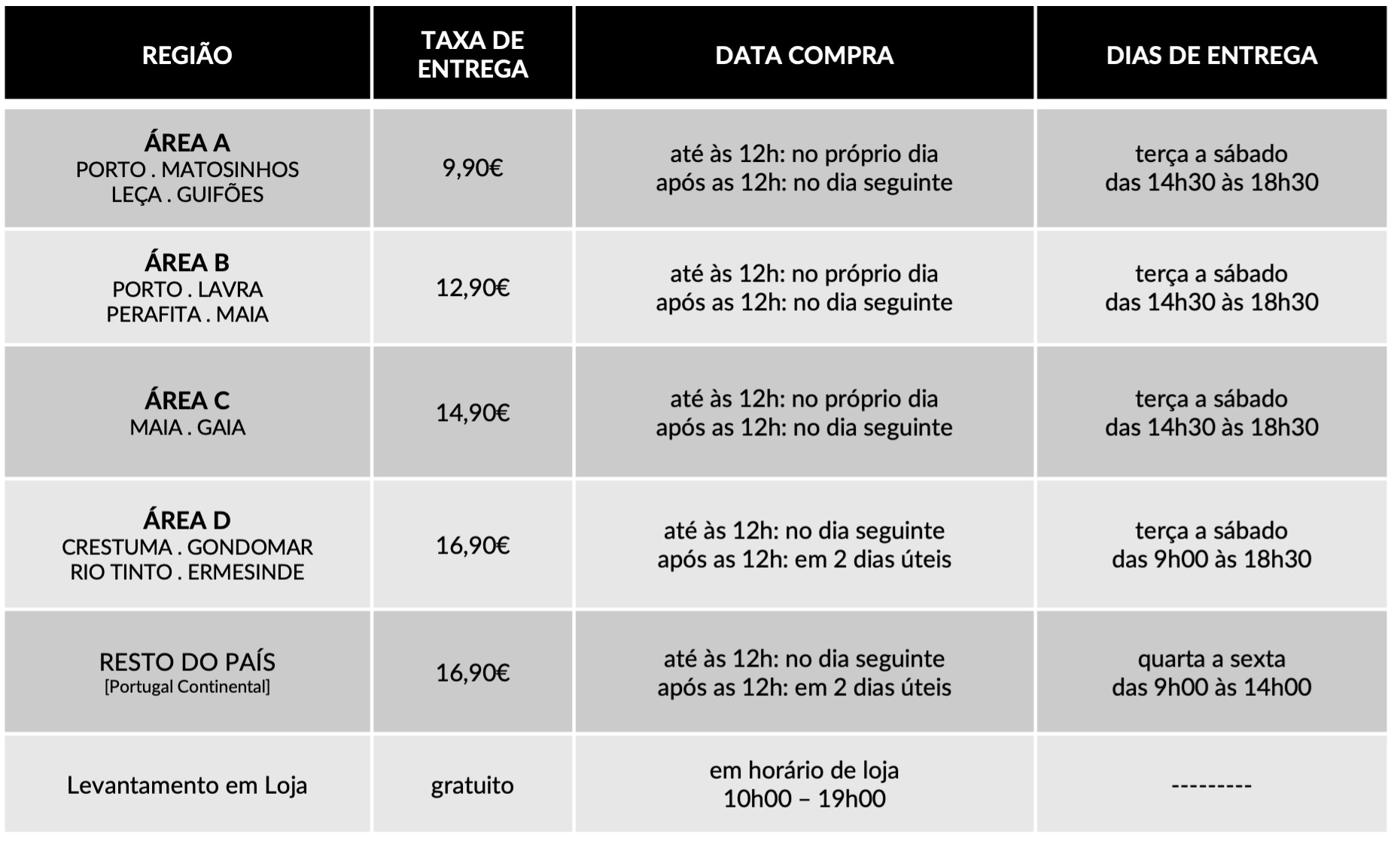
Caso não havendo outra referência dada pelo utilizador (por exemplo: deixar no porteiro, na loja x, à pessoa y) o utilizador será contactado de imediato para ficar ao corrente da situação e, à falta de alternativas, a encomenda voltará para a Terrárea, Caso seja reagendada uma nova entrega será cobrada novamente taxa de entrega.
Sublinhamos a importância dos dados fornecidos pelo utilizador estarem correctos e claros. Há sempre a possibilidade do utilizador acrescentar um ponto de referência e outras informações para que não hajam quaisquer dúvidas no acto da entrega garantindo, assim, a qualidade do serviço.
Lamentamos mas não podemos facultar essa informação, se o cliente que realizou a encomenda não pretender.
Estamos abertos a alterações embora estas estejam sempre condicionadas pelo tipo de pedido do utilizador, stock em loja e conceito estético. Nestes casos sugerimos o contacto telefónico ou por email.
Queremos satisfazer todos os nossos clientes e oferecer o nosso melhor serviço. Agradecemos, por isso, todas as opiniões e sugestões para podermos encontrar soluções às suas necessidades! Contacte-nos a partir dos seguintes meios: via email info@terrarea.pt ou telefone 223 170 414

Why STG and Stargate Finance Matter for Cross-Chain Liquidity (And What Bugs Me)
Okay, so check this out—I’ve been noodling on cross-chain bridges for a while now, and STG keeps popping up. Wow! The token matters more than many casual users realize. It’s a governance and incentive layer, and the way it ties economic security to user behavior is interesting, complicated, and a little bit messy.
My first impression was simple: another layer token, meh. Hmm… but then I dug into Stargate’s architecture and liquidity pools and things shifted. Initially I thought STG would be primarily a governance badge with little on-chain utility, but then I saw how it’s woven into liquidity incentives and fee models. Actually, wait—let me rephrase that: STG isn’t just for votes; it’s a lever for aligning LPs and cross-chain routing, though that leverage has trade-offs.
Here’s the thing. Seriously? Cross-chain transfers are not just technical problems; they’re economic design problems too. The bridge is simple to say and hard to perfect because every chain has its own liquidity profile and risk. On one hand you want deep liquidity and cheap finality; on the other hand you need composability across L2s, rollups, and sovereign chains. It’s a tough balancing act, and Stargate took a bold approach.
Something felt off about early bridges—they optimized for novelty over sound incentives. Whoa! Stargate instead focused on native asset pools and unified liquidity across chains, which is smart. By using pool-to-pool transfers and leveraging router incentives, they reduce the need for wrapped assets and lower UX friction, though maintaining balance across pools is never trivial.
Stargate Finance in Plain Terms
Stargate calls itself a fully composable cross-chain bridge, and that phrasing means something. Wow! It’s built so that protocols and dapps can move value and liquidity atomically, preserving composability across chains. That design choice matters because it allows DeFi primitives (like lending and AMMs) to operate without losing their cross-chain execution guarantees, though achieving that requires careful coordination among LPs, routers, and validators.
I’m biased, but I like that architecture. My instinct said this could reduce fragmented liquidity, and in practice it sometimes does. On the flip side, though, the governance and tokenomics can become central points of contention when incentives shift. Something like STG ends up being both a coordination tool and a political object.
STG itself functions across a few axes: governance, rewards, and staking incentives. Really? Yes—holders vote on protocol upgrades, receive part of the fee distribution via ve-like mechanics in some proposals, and LP rewards often route through STG allocations. That multiplexed utility is powerful, but it also creates complex dependencies between price action, on-chain voting, and LP behavior.
Okay, so check this out—token incentives drive pool behavior which affects cross-chain slippage and ultimately user costs. Wow! That’s circular. If LPs are rewarded too heavily, you get inflationary pressure; if too little, pools thin out and the UX suffers. The protocol must constantly tune these dials, and that tuning is part technical, part social negotiation.
Security, Risk, and the Human Factor
I’ll be honest—I worry about concentrated control. Hmm… centralized multisigs and early team allocations are normal in crypto launches, but they put pressure on community trust. On one hand, an active core team helps iterate quickly; though actually, it also means governance can be front-loaded and resistant to change later. My instinct said decentralization would emerge over time, but that requires ongoing participation and incentives that are very very important (yes, I said it twice).
Bridge security is more than audits and formal verification. Whoa! It’s also about economic design, rebalancing, and emergency response plans. Stargate’s approach of using on-chain liquidity pools reduces wrapping risk, but smart contract exploits, routing attacks, and oracle oracles—sorry, or oracular failures—can still create catastrophic outcomes. The protocol’s incident playbooks matter as much as the code.
Here’s what bugs me about the industry: defenders often point to insurance funds and white-hat programs as silver bullets, but those are reactive. Wow! Proactive economic defenses—carefully tuned fee floors, dynamic incentives, and slashing conditions—are harder to build and less sexy, yet they reduce tail risk more effectively. I’m not 100% sure of the optimal mix, but I know when something feels patchy and reactive.
How STG Impacts Users and Developers
For end users, the most visible benefits are lower friction and fewer wrapped tokens on destination chains. Really? Yes—atomic swaps and pool-based routing reduce points of failure and simplify UX. But costs can still vary by chain, and route selection (especially when routers are external) can introduce unexpected fees and latency.
Developers get something else: composability. Whoa! Protocols can integrate Stargate to move liquidity programmatically and rely on cross-chain atomicity, which opens interesting product designs like cross-chain lending and vaults that rebalance across chains. That said, teams must understand the intricacies of liquidity rebalancing and reward signal alignment; integration is not a magic checkbox.
Something I tell teams: test against imbalanced pool scenarios. Wow! Simulate sudden withdrawals on a popular chain or a routing blackout and see how your strategy behaves. My gut says many projects under-test for cascade failure, and that optimism bites later (oh, and by the way… this has happened before in other bridges).
Tokenomics: The Long Game
STG’s supply schedule and vesting can shape long-term health. Initially I thought simple inflation schedules would suffice, but then learned the value of locking mechanisms and ve-style curves for securing long-term liquidity. Actually, wait—consider short-term liquidity needs too; you need to bootstrap pools while not diluting future governance seriously.
Balancing bootstrap incentives with long-term staking rewards is an art. Whoa! The wrong mix either insults early contributors or starves future governance of active holders. I’d prefer conservative inflation with targeted early incentives, but I’m biased and know teams sometimes prioritize growth and TVL over durable governance.
Community governance is messy. Wow! Votes can be low-turnout, and whales can steer outcomes. On one hand, STG governance allows protocol evolution; though actually, if participation remains low, governance becomes oligarchic by default. The remedy is incentives for participation—small, steady rewards for voting or reputation systems that reward active stewards.
FAQs
Is STG necessary to use Stargate’s bridge?
Not strictly. You can use the bridge without holding STG, because the core protocol handles transfers and liquidity pools. Wow! But holding STG gives you governance influence and access to some reward streams, which can matter if you’re an LP or a protocol builder.
How safe is Stargate compared to other bridges?
Safety is relative. Stargate reduces wrapping risk by using native asset pools, which is a real advantage, but it’s not invulnerable. Whoa! Watch for smart contract audits, on-chain insurance, and the decentralization of key control points before assuming complete safety.
Where can I learn more?
For an official overview and deeper docs, check out the stargate finance official site for architecture notes and governance details. Wow! It’s a good starting point to see how pools, routers, and governance interlock, and it helped me re-evaluate some assumptions when I first read it.
Final thought—this is exciting and fragile at once. Wow! Cross-chain liquidity is reshaping DeFi, and projects like Stargate push us toward better composability and UX. I’m optimistic, but cautious; my instinct says we’re still learning how to build resilient, incentive-compatible bridges at scale. Somethin’ tells me the next big leaps won’t be flashy; they’ll be quietly technical and boring, and that’s where true resilience lives…